


What Is a Flagstone Patio? Types, Pros & Cons Explained

Imagine stepping into your backyard and seeing a patio that feels like it has always belonged there. Not a slab of poured concrete. Not a grid of identical pavers. But a natural stone surface with unique textures, earthy colors, and character that only nature can create.
That's the appeal of a flagstone patio.
For decades, homeowners and landscape designers have used flagstone to create outdoor spaces that feel timeless, durable, and connected to the surrounding landscape. But before you start planning a patio project, it's important to understand what flagstone is, which types work best, and whether it's the right choice for your home.
This guide breaks everything down in plain English, from the different types of flagstone to installation basics, costs, advantages, disadvantages, and design ideas that can completely transform your outdoor space.
What Is a Flagstone Patio?
Many homeowners ask what a flagstone is when they see a patio that looks as if it's settled into the yard, not stamped into it. A flagstone is a flat piece of natural stone, split or cut for walking surfaces such as patios, paths, and pool decks.
That simple definition hides many choices. Stone type, base prep, joint fill, and climate all affect how a flagstone patio or walkway looks and how long it lasts.
Why Homeowners Love Flagstone Patios
Flagstone remains one of the most popular landscaping materials because it offers:
- Natural beauty that never goes out of style
- Excellent durability
- Long lifespan
- Strong resistance to weather
- Endless design flexibility
- Increased curb appeal
"A great flagstone patio doesn't look built; it looks discovered."
What Is a Flagstone?
The term flagstone refers to naturally occurring stone that splits into flat layers suitable for paving surfaces.
These stones are quarried and cut into slabs that can be used for:
- Patios
- Walkways
- Garden paths
- Pool decks
- Outdoor kitchens
- Fire pit areas
- Landscape accents
Unlike concrete products, flagstone preserves its natural texture and appearance, making it a favorite choice for homeowners who want a more authentic outdoor environment.
Types of Flagstone: Which One Is Right for You?
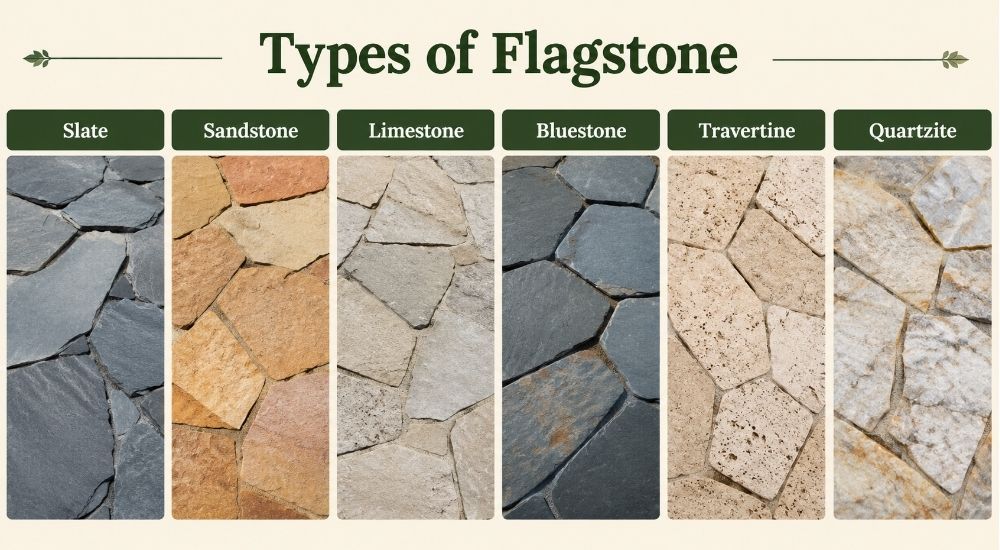
Limestone Flagstone
Limestone is one of the most common patio materials used throughout Texas because it blends naturally with regional architecture and performs well in hot climates.
Pros
- Stays cooler under direct sunlight
- Natural Texas appearance
- Durable for long-term patio use
- Works well for modern and rustic outdoor spaces
Cons
- Can stain if left unsealed
- Softer than granite
- Requires periodic maintenance
Contractor Insight
Many homeowners choose limestone strictly for appearance without realizing sealing plays a major role in longevity. Around outdoor kitchens, grills, and entertainment areas, unsealed limestone can absorb grease, moisture, and organic staining faster than denser stone materials.
Travertine Flagstone
Travertine is popular for luxury patios and pool decks because it remains cooler underfoot compared to many other natural stones.
Pros
- Excellent heat resistance
- Premium appearance
- Naturally slip-resistant texture
- Great around pools
Cons
- Higher installation cost
- Requires proper sealing
- Softer surface can scratch
Best Use
Travertine performs especially well in San Antonio poolside environments where barefoot comfort matters during peak summer temperatures.
Sandstone Flagstone
Sandstone offers warm natural color tones and earthy textures that fit traditional backyard designs.
Pros
- Attractive natural variation
- Rustic appearance
- Budget-friendly compared to premium stone
Cons
- More porous than other stones
- Can weather faster
- Requires consistent sealing
Important Warning
We generally avoid recommending softer sandstone near heavily shaded areas with poor drainage because moisture retention can accelerate surface wear over time.
Slate Flagstone
Slate creates one of the most visually striking patio finishes available.
Pros
- Rich color variation
- Modern high-end appearance
- Dense and durable surface
Cons
- Can become slippery when polished
- Higher material cost
- Some imported slate varies in quality
Using Flagstone in Landscaping
Most homeowners think of patios first, but flagstone is one of the most versatile landscaping materials available.
Popular uses include:
- Garden walkways
- Stepping stone paths
- Fire pit seating areas
- Outdoor dining spaces
- Water feature surrounds
- Pool decks
- Retaining wall accents
The biggest advantage of using flagstone in landscaping is its ability to blend seamlessly with plants, lawns, and natural surroundings.
Instead of feeling like an addition, it feels like part of the landscape itself.
Flagstone Walkway Ideas to Inspire Your Landscape
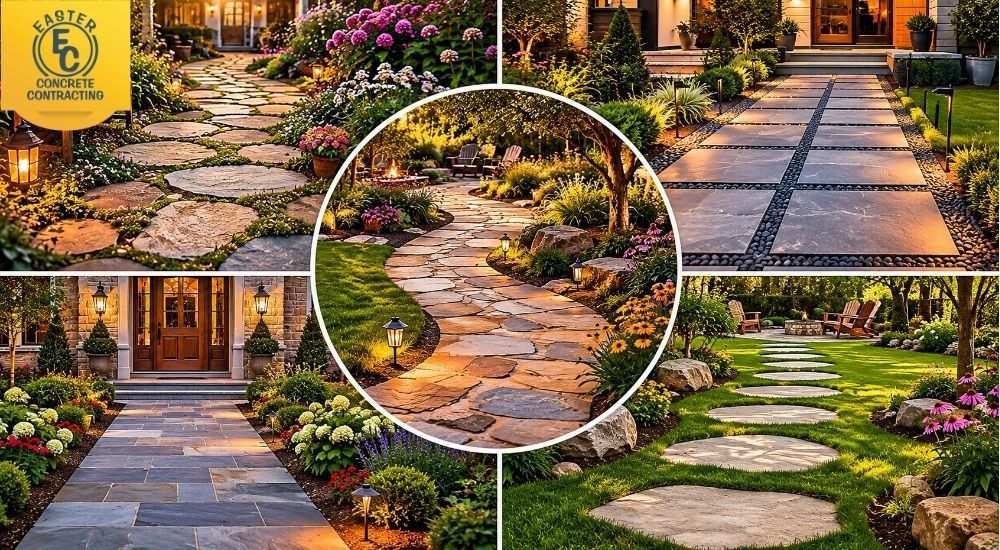
If you're planning a larger outdoor makeover, flagstone walkways can tie everything together.
The Cottage Garden Path
Irregular stones with creeping thyme or moss growing between them create a relaxed, storybook appearance.
The Modern Grid
Square-cut flagstones spaced evenly with gravel joints create a clean contemporary design.
The Natural Meandering Path
Curved walkways with flagstone mimic the look of natural trails through a garden.
The Formal Entry Walkway
Bluestone arranged in straight lines provides a polished appearance that complements traditional architecture.
Stepping Stone Lawn Path
Large individual stones set directly into grass offer a simple yet elegant solution.
How Much Does a Flagstone Patio Cost?
One of the most common questions homeowners ask is about cost.
The answer depends on:
- Stone type
- Patio size
- Site preparation
- Local labor rates
- Installation method
Average Cost Estimates
| Project Type | Average Cost |
|---|---|
| DIY Flagstone Patio | $10–$20 per sq. ft. |
| Professional Installation | $15–$35+ per sq. ft. |
| Flagstone Walkway | $8–$25 per sq. ft. |
Premium stones like bluestone and quartzite generally cost more than sandstone or limestone.
Although the initial investment is higher than concrete, many homeowners find the long-term durability and appearance worth the added expense.
How to Make a Flagstone Patio
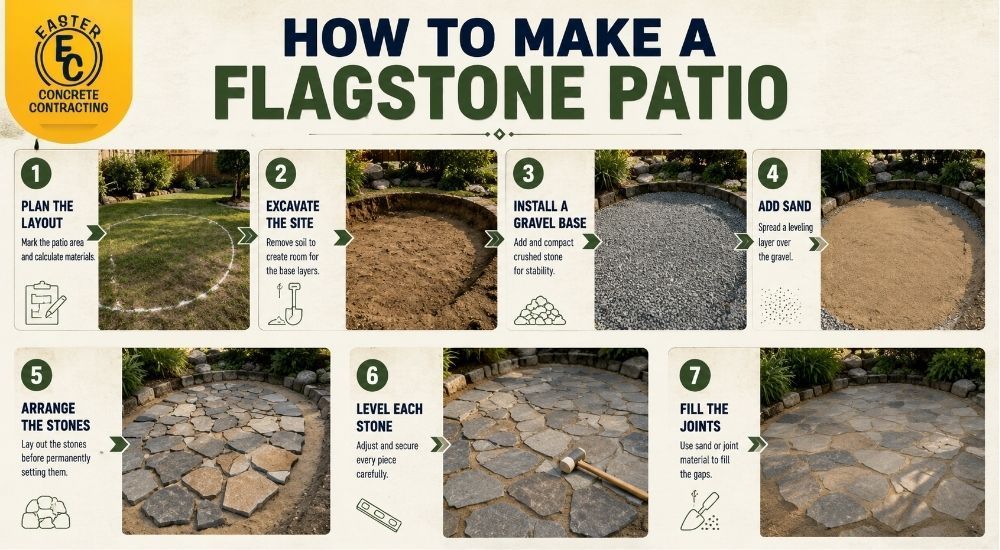
A flagstone patio is one of the most rewarding DIY landscaping projects. While the process requires some planning and physical work, the result is a natural outdoor space that can last for decades. The key is creating a solid foundation before the stones are ever placed.
Step 1: Plan the Layout
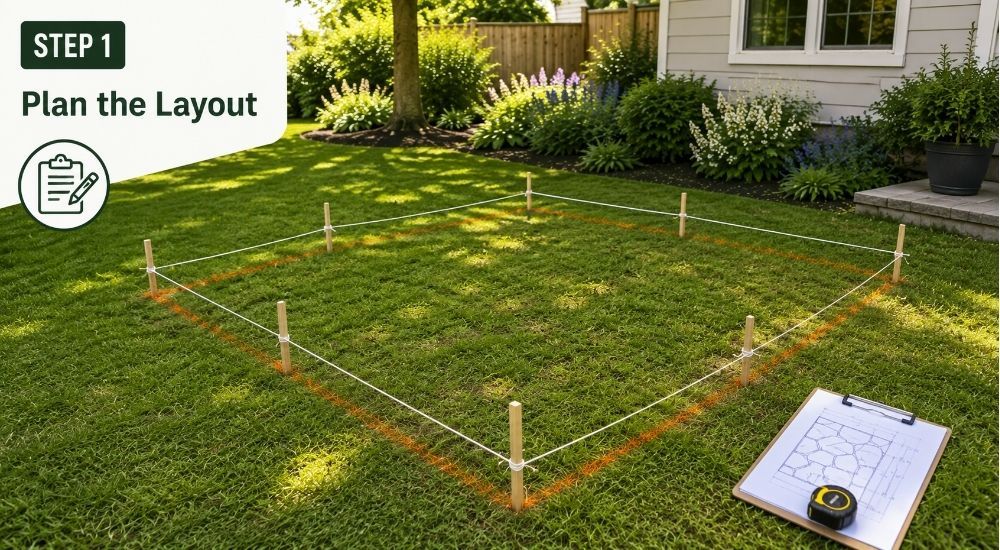
Start by deciding how large your patio will be and how you want it to fit into the surrounding landscape. Use stakes, string, or marking paint to outline the area and calculate the amount of stone, gravel, and sand you'll need.
Pro Tip: Order 10–15% extra flagstone to account for cuts, breakage, and irregular shapes.
Step 2: Excavate the Site
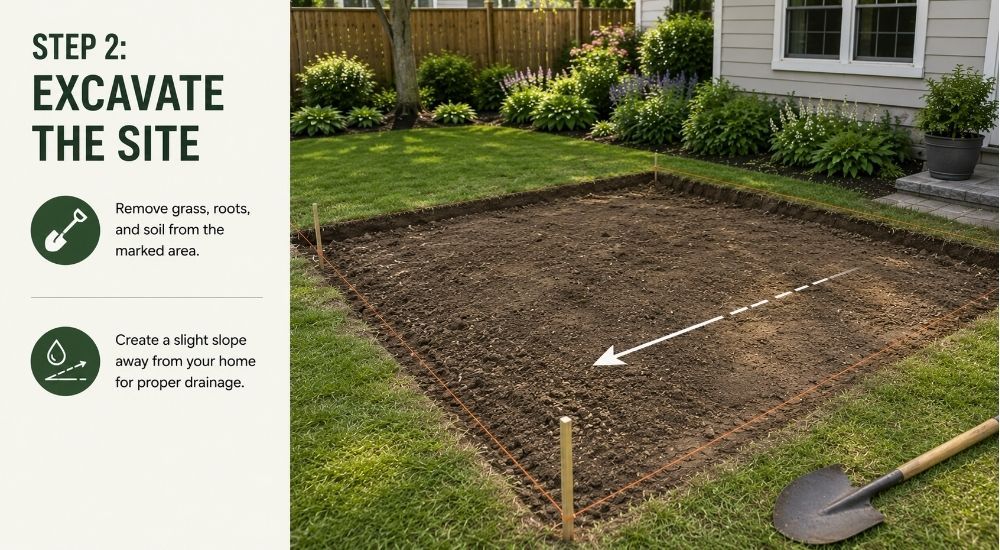
Remove grass, roots, and soil from the marked area. Most patios require excavation of approximately 6–8 inches to create enough space for the base materials and the stone itself.
A slight slope away from your home helps direct water away from the foundation and improves drainage.
Step 3: Install a Gravel Base
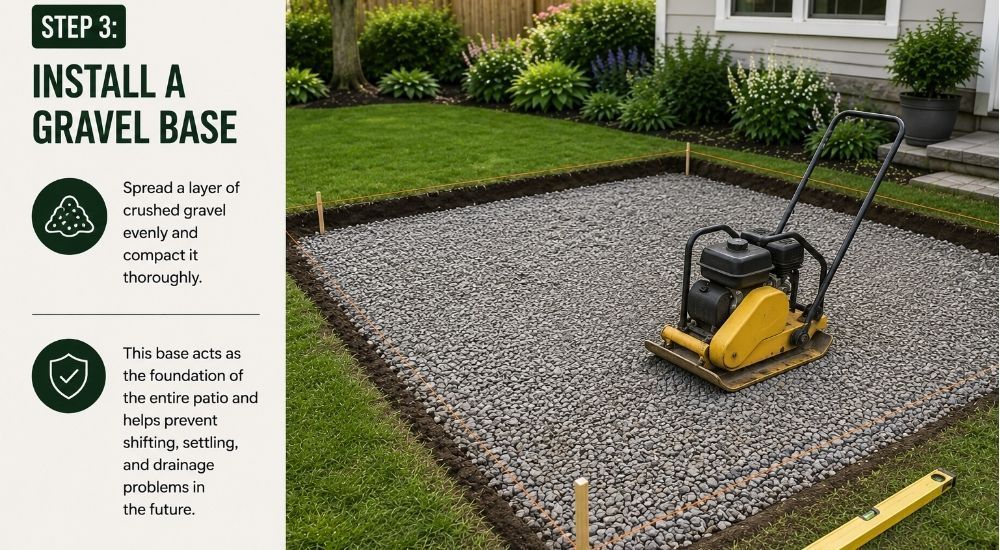
Spread a layer of crushed gravel evenly across the excavated area and compact it thoroughly using a plate compactor.
This base acts as the foundation of the entire patio and helps prevent shifting, settling, and drainage problems in the future.
Step 4: Add Sand
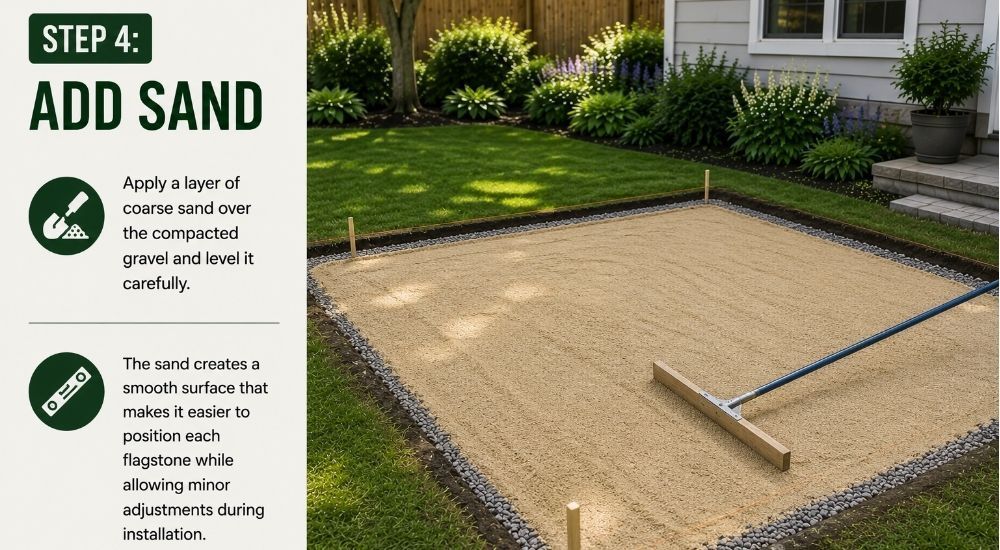
Apply a layer of coarse sand over the compacted gravel and level it carefully.
The sand creates a smooth surface that makes it easier to position each flagstone while allowing minor adjustments during installation.
Step 5: Arrange the Stones
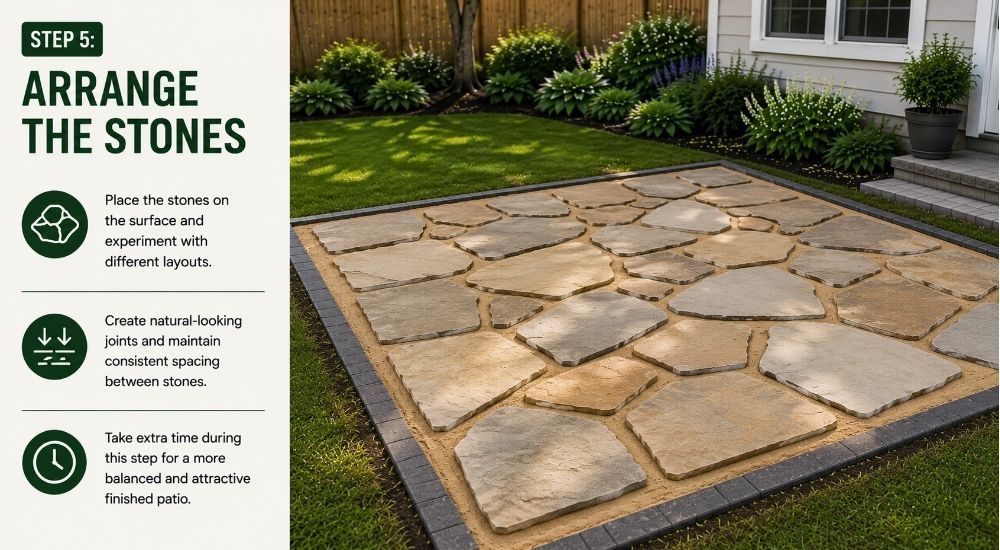
Before permanently setting the stones, place them on the surface and experiment with different layouts.
Try to create natural-looking joints and maintain consistent spacing between stones. Taking extra time during this step often leads to a more balanced and attractive finished patio.
Step 6: Level Each Stone
Set each stone individually and check it with a level as you work.
Use a rubber mallet to adjust the height and ensure neighboring stones sit evenly. This step improves both appearance and safety by reducing trip hazards.
Step 7: Fill the Joints
Once all stones are in place, fill the gaps with polymeric sand, gravel, crushed stone, or low-growing ground cover plants.
The material you choose will affect the overall appearance, maintenance requirements, and weed resistance of the patio.
Common DIY Mistakes to Avoid
Even high-quality flagstone can fail when installation shortcuts are taken.
Avoid these common mistakes:
- Skipping proper excavation depth
- Using an unstable gravel base
- Ignoring drainage and slope requirements
- Leaving uneven joints between stones
- Rushing the leveling process
Key Takeaway: The most important part of any flagstone patio is the foundation beneath it. A properly compacted base with good drainage will do more for long-term performance than any specific type of stone.
Best Flagstone Options for Hot Climates
If your patio receives direct sun throughout the day, surface temperature becomes an important consideration.
Lighter-colored stones generally remain cooler underfoot than darker materials.
Popular choices include:
- Limestone
- Travertine
- Light-colored sandstone
These materials are often preferred for:
- Pool decks
- Outdoor seating areas
- Family gathering spaces
- Barefoot traffic zone
Common Maintenance Mistakes to Avoid
Even durable natural stone can develop issues when maintenance is overlooked.
Avoid these common mistakes:
- Using excessive pressure when washing the surface
- Ignoring weeds before they spread through joints
- Applying too much sealer
- Allowing water to collect on the patio surface
Routine maintenance is simple and helps preserve the patio's appearance for decades.
Conclusion: Is a Flagstone Patio Worth It?
For homeowners looking to create a backyard that feels natural, timeless, and unique, a flagstone patio remains one of the best investments available.
While it requires more planning and a higher upfront cost than some alternatives, the payoff is hard to ignore. Few patio materials can match the character, durability, and visual appeal of natural stone.
When evaluating patio materials, remember that long-term performance depends on more than the stone itself. Proper drainage, foundation preparation, installation quality, and material selection all play a role in how your patio looks and performs years from now.
At Easter Concrete Contracting, we've helped homeowners create outdoor spaces designed around durability, functionality, and lasting curb appeal. Whether you're planning a cozy backyard retreat or a complete outdoor living area, choosing the right materials and installation approach can make all the difference.
Frequently Asked Questions
How long does a flagstone patio last?
A properly installed flagstone patio can last 25–50 years or more.
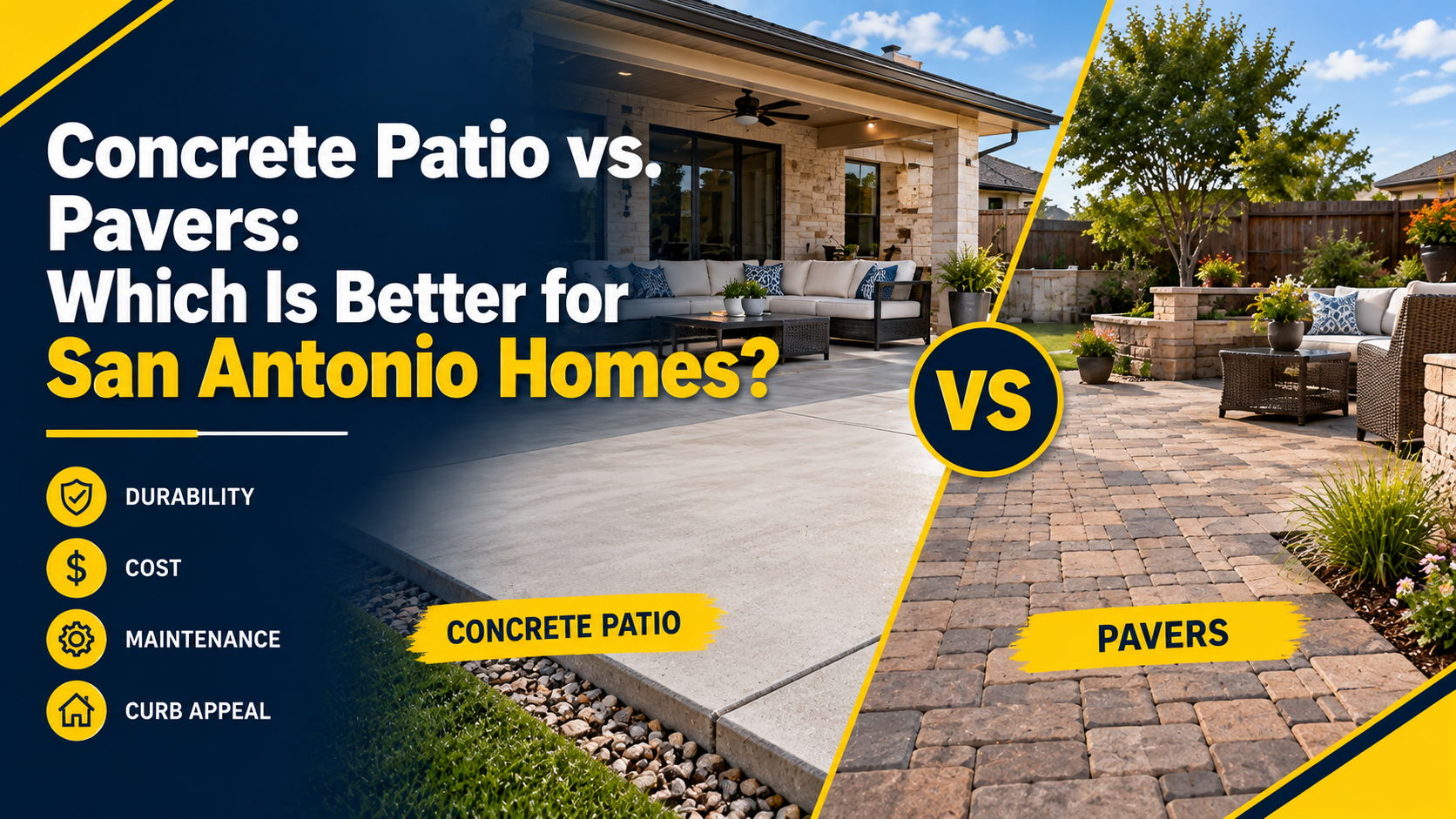
Is flagstone better than concrete?
Flagstone offers a more natural appearance and often lasts longer, although it typically costs more.
What is the cheapest type of flagstone?
Limestone and some local sandstone varieties are usually the most affordable options.
Can I install a flagstone patio myself?
Yes. Many homeowners complete DIY flagstone patio projects with proper planning and preparation.
Is flagstone slippery when wet?
Most flagstone varieties provide good traction, making them safer than many smooth concrete surfaces.