

4 Types of Concrete Driveways: Pros, Cons & Which One Is Right for You

Concrete is one of the most popular driveway materials in Texas durable, low-maintenance, and versatile enough for any home style or budget. But not all concrete driveways are equal. The type you choose affects your cost, curb appeal, safety, and long-term maintenance. This guide covers all four types with honest pros, cons, cost estimates, and real-world use cases.
1. Plain Concrete Driveway (Standard Gray Concrete)
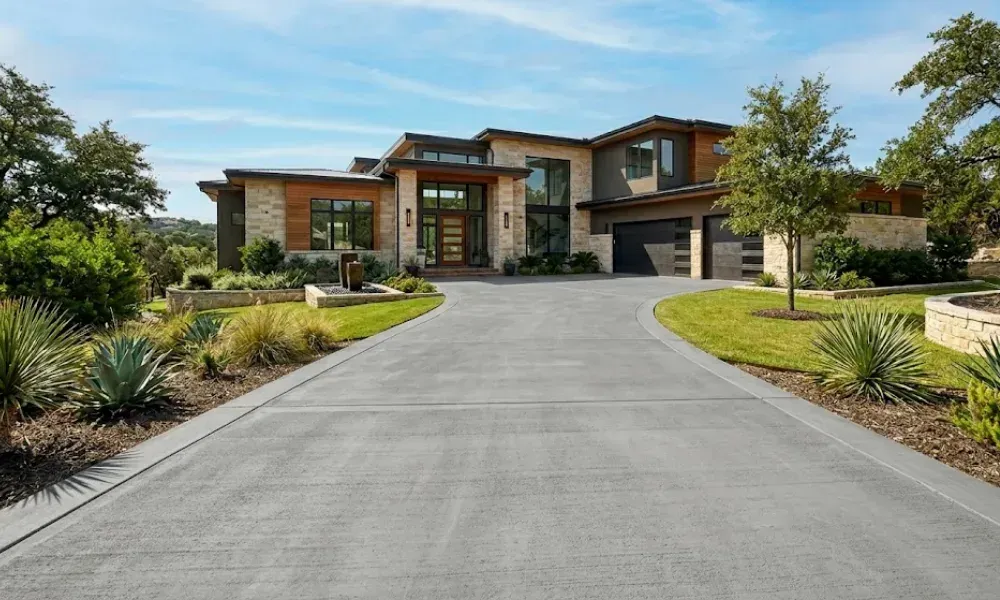
Plain concrete also called broom-finish or standard gray concrete is the most common driveway type installed across the U.S. It uses a basic cement, sand, and aggregate mix, finished with a broom drag for minimal traction texture. If you want a driveway that simply works cleanly, reliably, and affordably this is your starting point.
Pros
Plain concrete offers the lowest installed cost of any concrete option, typically $4–$8 per square foot. It requires minimal upkeep, occasional sealing every 3 years and periodic cleaning. Properly installed with control joints and adequate reinforcement, a plain concrete driveway can last 30–50 years in Texas conditions.
Cons
Oil stains, tire marks, and rust from metal are highly visible on an unfinished gray surface. Without regular sealing, Texas heat and freeze events can accelerate surface cracking. It also offers minimal curb appeal return if you are planning to sell.
Texas Tip: In hot Texas climates, cure plain concrete slowly using wet burlap or curing compound. Rushing the cure in summer heat leads to surface cracking within the first year.
Plain Concrete at a Glance
Installed cost: $4–$8/sq ft | Lifespan: 30–50 years
+ Lowest upfront cost of all concrete types
+ Durable and long-lasting with proper care
+ Minimal maintenance: seal, clean, repeat
- Least decorative option available
- Stains and tire marks are highly visible
- Cracks are obvious without matched repair
Best for: Budget-conscious homeowners, rental properties, side or rear driveways, and anyone prioritizing function over form.
2. Stamped Concrete Driveway
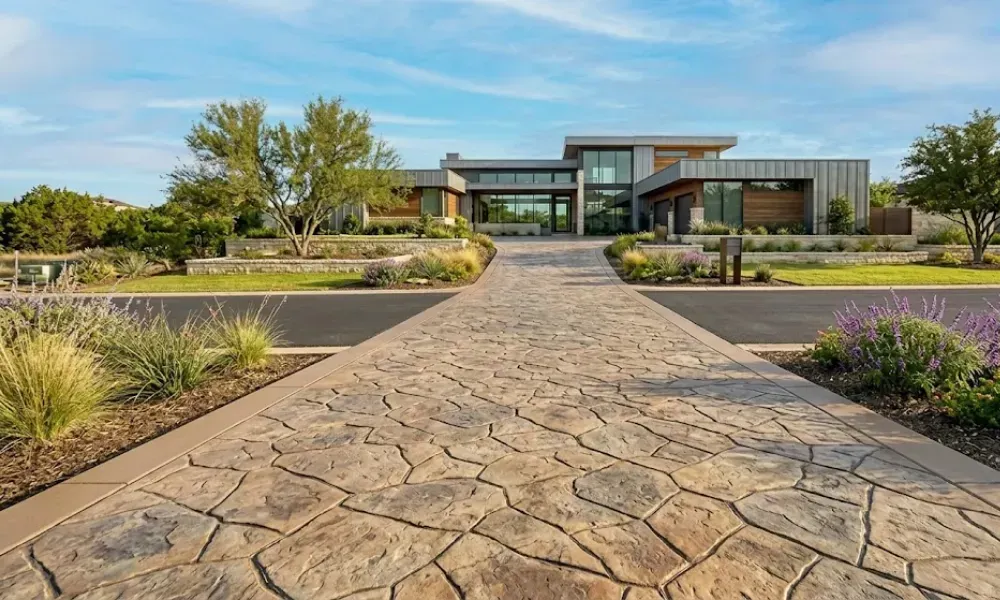
Stamped concrete is poured as standard concrete, then imprinted with large rubber mats before it fully sets, creating patterns that mimic brick, slate, cobblestone, flagstone, or even wood planks. Combined with integral color or acid stain, it delivers a look of expensive natural stone at a fraction of the material cost. It is the most popular upgrade Easter Concrete installs across Texas.
Pros
Stamped concrete delivers the highest curb appeal of any concrete option. It can replicate premium materials like travertine or clay pavers without the weed growth or shifting issues of individual pavers. A well-designed stamped driveway can measurably increase your home's perceived value and appeal to buyers.
Cons
Expect $12–$22 per square foot installed roughly 2–3x the cost of plain concrete. Stamped surfaces require resealing every 2–3 years. Without a non-slip additive in the sealer, stamped concrete can be slippery when wet, which matters especially during Texas summer thunderstorms.
Pro Tip:
Always request a physical sample board before approving a pattern and color combo. Colors look drastically different at full driveway scale versus a small brochure swatch.
Stamped Concrete at a Glance
Installed cost: $12–$22/sq ft | Lifespan: 25–40 years with maintenance
+ Highest curb appeal of any concrete type
+ Mimics stone, brick, or pavers at lower cost
+ Strong concrete base under decorative finish
- Most expensive concrete driveway option
- Slippery when wet without non-slip sealer additive
- Needs resealing every 2–3 years to prevent fading
Best for:
Front-entry driveways, circular drives, luxury homes, short-term rental properties, and homeowners preparing to sell.
3. Exposed Aggregate Concrete Driveway
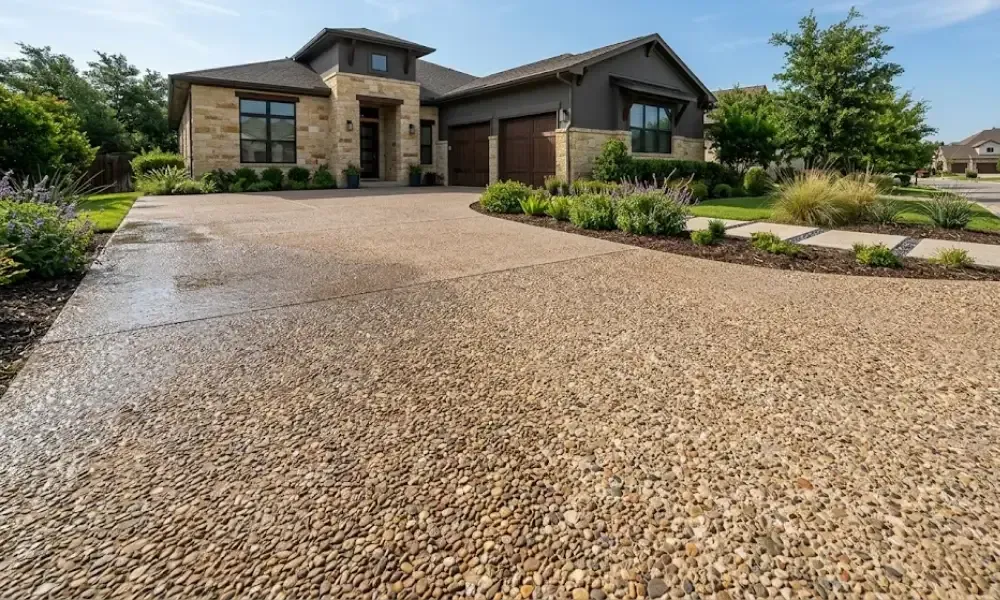
Exposed aggregate concrete is created by washing or brushing away the top cement layer before it fully cures revealing the natural stones, pebbles, or shells embedded in the mix. The result is a textured, multi-tonal surface that looks organic and handles traffic beautifully. Each driveway looks slightly different depending on the stone selection, making it one of the more unique concrete options available.
Pros
The standout advantage is slip resistance. The rough stone texture provides serious grip underfoot even when wet making it one of the safest driveway surfaces available. Exposed aggregate also hides tire marks, oil drips, and surface staining far better than plain concrete. Because the texture is part of the concrete itself, it will not peel or wear away.
Cons
The same texture that provides grip makes it harder to shovel during rare Texas winter events and can accumulate dirt and debris between stones, requiring periodic pressure washing. It is also difficult to repair seamlessly. Cost runs $8–$16 per square foot installed.
Installed cost: $8–$16/sq ft | Lifespan: 30–50 years
+ Superior slip resistance safest concrete surface
+ Naturally hides stains, tire marks, and weathering
+ Unique appearance no two driveways look the same
- Texture traps dirt and debris between stones
- Difficult to patch or repair seamlessly
- Not barefoot-friendly on hot Texas summer days
Best for:
Steep driveways, wet or shaded areas, pool surrounds, and homeowners who want a natural aesthetic with built-in safety.
4. Colored / Stained Concrete Driveway
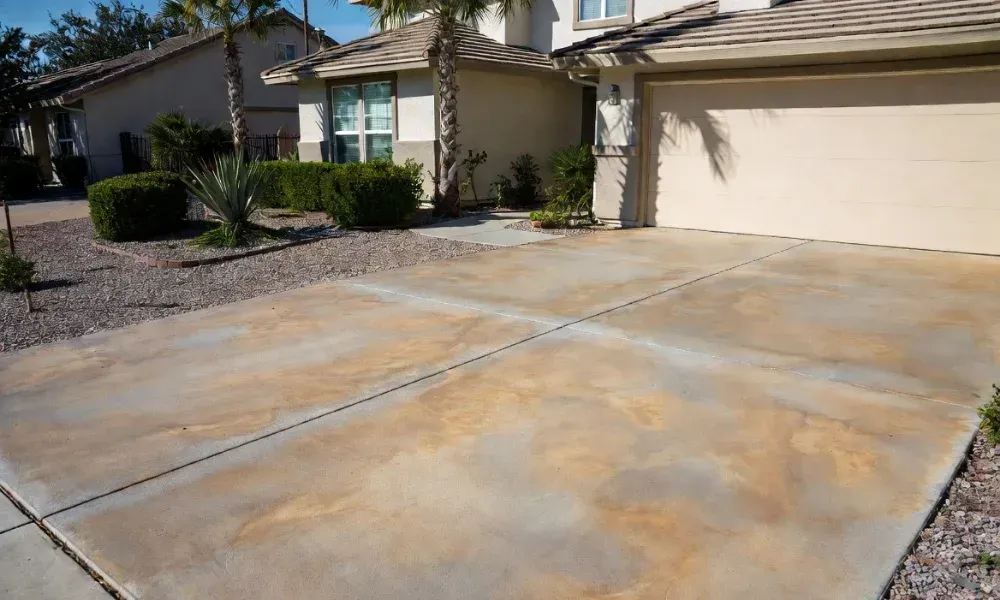
Colored concrete driveways use pigment either mixed directly into the concrete (integral color) or applied as an acid stain, water-based dye, or surface coating after curing to transform a standard gray slab into a design statement. Integral color runs through the full depth of the slab, so minor surface wear does not expose gray underneath. Acid staining creates organic, marbled effects that are genuinely one-of-a-kind.
Pros
Colored concrete offers near-unlimited design flexibility. You can match your home exterior palette, coordinate with landscaping, or create a bold contrast. It works beautifully alongside stamped patterns. It can also be applied to existing concrete slabs as a cost-effective refresh with no full replacement required.
Cons
Surface-applied stains and dyes fade over time with UV exposure a real concern in the Texas sun and require periodic reapplication. Matching the original color batch during repairs is notoriously difficult. Cost ranges from $6–$15 per square foot depending on method and pigment complexity.
Texas Sun Note:
UV-stable, penetrating sealers are essential for colored concrete in Texas. Without them, even high-quality integral colors can fade visibly within 3–5 years of direct sun exposure.
Colored / Stained Concrete at a Glance
Installed cost: $6–$15/sq ft | Lifespan: 20–40 years depending on finish
+ Unlimited color customization options
+ Can refresh existing slabs without full replacement
+ Pairs perfectly with stamped patterns
- Surface stains fade under prolonged UV exposure
- Difficult to color-match during future repairs
- Requires UV-stable sealer especially in Texas
Best for:
Design-forward homeowners, modern or contemporary architecture, commercial properties, and driveway refresh projects.
Side-by-Side Comparison
| Type | Cost/sq ft | Durability | Curb Appeal | Slip Resistance | Best For |
|---|---|---|---|---|---|
| Plain concrete | $4–$8 | High | Low | Moderate | Budget, rentals |
| Stamped concrete | $12–$22 | Medium | High | Low* | Curb appeal, luxury |
| Exposed aggregate | $8–$16 | High | Medium | Excellent | Safety, wet areas |
| Colored / stained | $6–$15 | Medium | Medium–High | Moderate | Design, renovation |
* Stamped concrete requires a non-slip sealer additive for adequate wet-weather traction.?
How to Calculate Concrete for Your Driveway
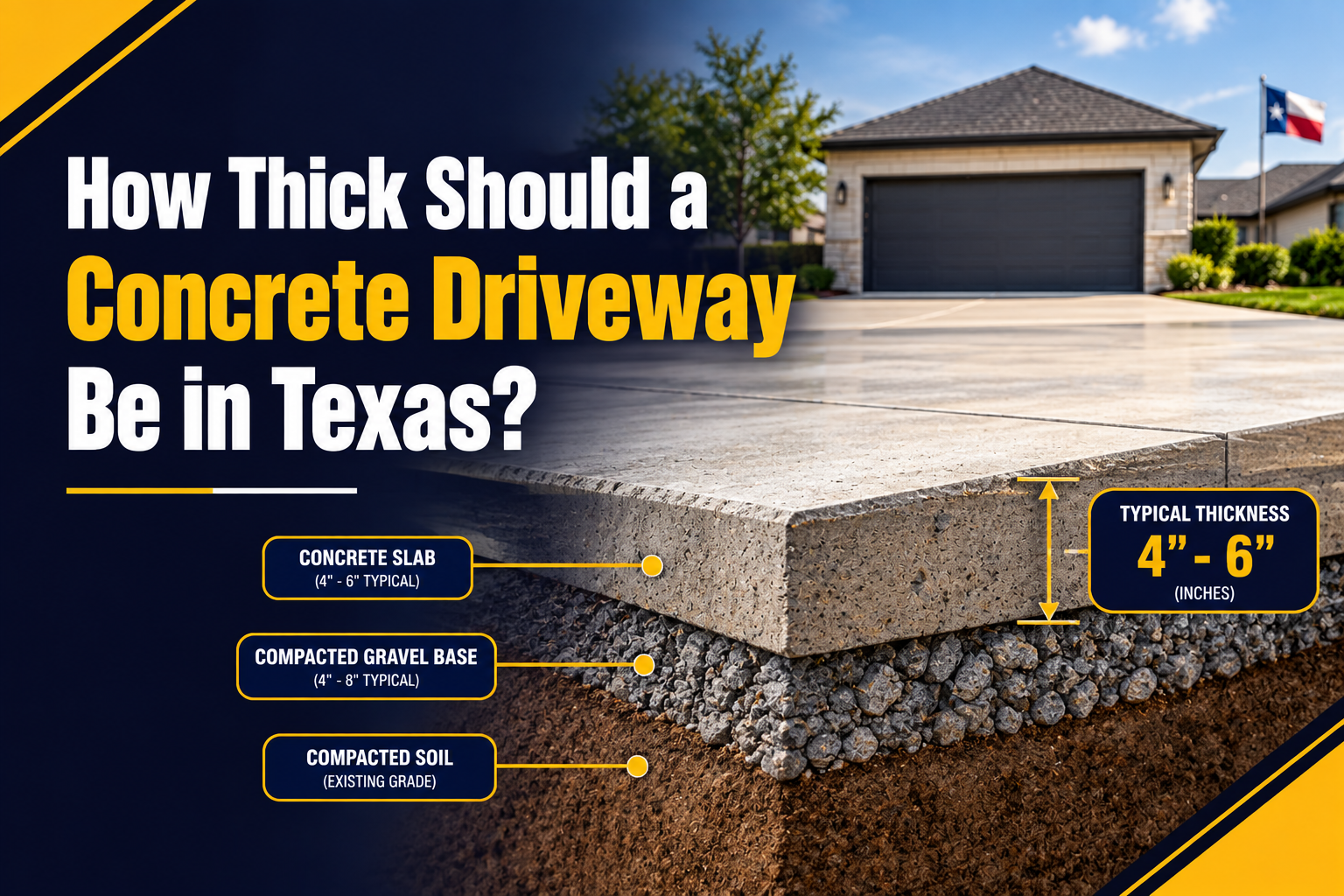
Calculating the right amount of concrete for your driveway is important to avoid material waste or project delays. The process is simple once you know your driveway’s length, width, and depth, you can estimate the total concrete required in cubic yards. This helps you plan your budget better and ensures your driveway has the proper strength and thickness for long-term durability, especially in Texas conditions where soil movement and heat can impact performance.
| Driveway Size | Depth | Cubic Feet | Cubic Yards Required |
|---|---|---|---|
| 20 × 10 ft | 4 inches | ~66 cu ft | ~2.5 cubic yards |
| 30 × 12 ft | 4 inches | ~119 cu ft | ~4.5 cubic yards |
| 40 × 15 ft | 4 inches | ~198 cu ft | ~7.5 cubic yards |
| 50 × 20 ft | 4 inches | ~330 cu ft | ~12 cubic yards |
Still Confused? Here’s Exactly What You Should Choose
If you're still unsure, here’s a simple way to decide based on your situation:
- On a tight budget?
Go with plain concrete — it’s durable, affordable, and gets the job done. - Want your home to look premium or increase resale value?
Choose stamped concrete — best for curb appeal. - Have a slope, water issues, or safety concerns?
Pick exposed aggregate — maximum grip, safest option. - Care more about design and customization?
Go for colored or stained concrete. - Want the best overall balance?
Most Texas homeowners go with a stamped + color combo.
Mistakes Homeowners Make When Choosing a Driveway
Before you decide, avoid these common mistakes:
- Choosing based only on price (cheap now = expensive repairs later)
- Ignoring Texas heat and soil movement
- Skipping sealing (huge mistake in Texas climate)
- Hiring the cheapest contractor without proper site inspection
- Not adding slip resistance to stamped concrete
Smart choice = thinking long-term, not just upfront cost.
Real Examples: What Most Homeowners in Texas Choose
- A homeowner in San Antonio with a budget under $5K - chooses plain concrete
- A family upgrading their front driveway before selling - chooses stamped concrete
- A house with a sloped driveway - chooses exposed aggregate
- A modern home with design focus - chooses colored + stamped combo
Why Professional Installation Matters
The type of concrete you choose matters but so does who pours it. Even the best mix design fails early if the subgrade is not properly compacted, control joints are poorly placed, or the concrete is finished too wet in summer heat. Common mistakes include inadequate base preparation, improper joint spacing, rushing the pour in extreme temperatures, and skipping curing steps.
At Easter Concrete Contracting, every driveway installation in Texas follows a proven process: soil assessment and compaction, proper base thickness, engineered joint placement, and a curing protocol suited to Texas weather.
Watch Out:
Warning: If a contractor skips a site assessment or gives you a quote without visiting the property walk away. Proper concrete work requires knowing your soil type, drainage, and load requirements before mixing a single bag.
Frequently Asked Questions
Q: What is the best type of concrete driveway?
A: There is no single best, it depends on your priorities. For budget and durability: plain concrete. For curb appeal: stamped. For safety and traction: exposed aggregate. For design flexibility: colored or stained. Most Texas homeowners with curb appeal goals choose stamped or colored concrete.
Q: How long does a concrete driveway last in Texas?
A: A professionally installed concrete driveway in Texas typically lasts 30–50 years. Texas heat, UV exposure, and occasional freeze-thaw cycles in North Texas can accelerate wear if the concrete is not properly cured and sealed. Sealing every 2–3 years significantly extends lifespan.
Q: How much does a concrete driveway cost in Texas?
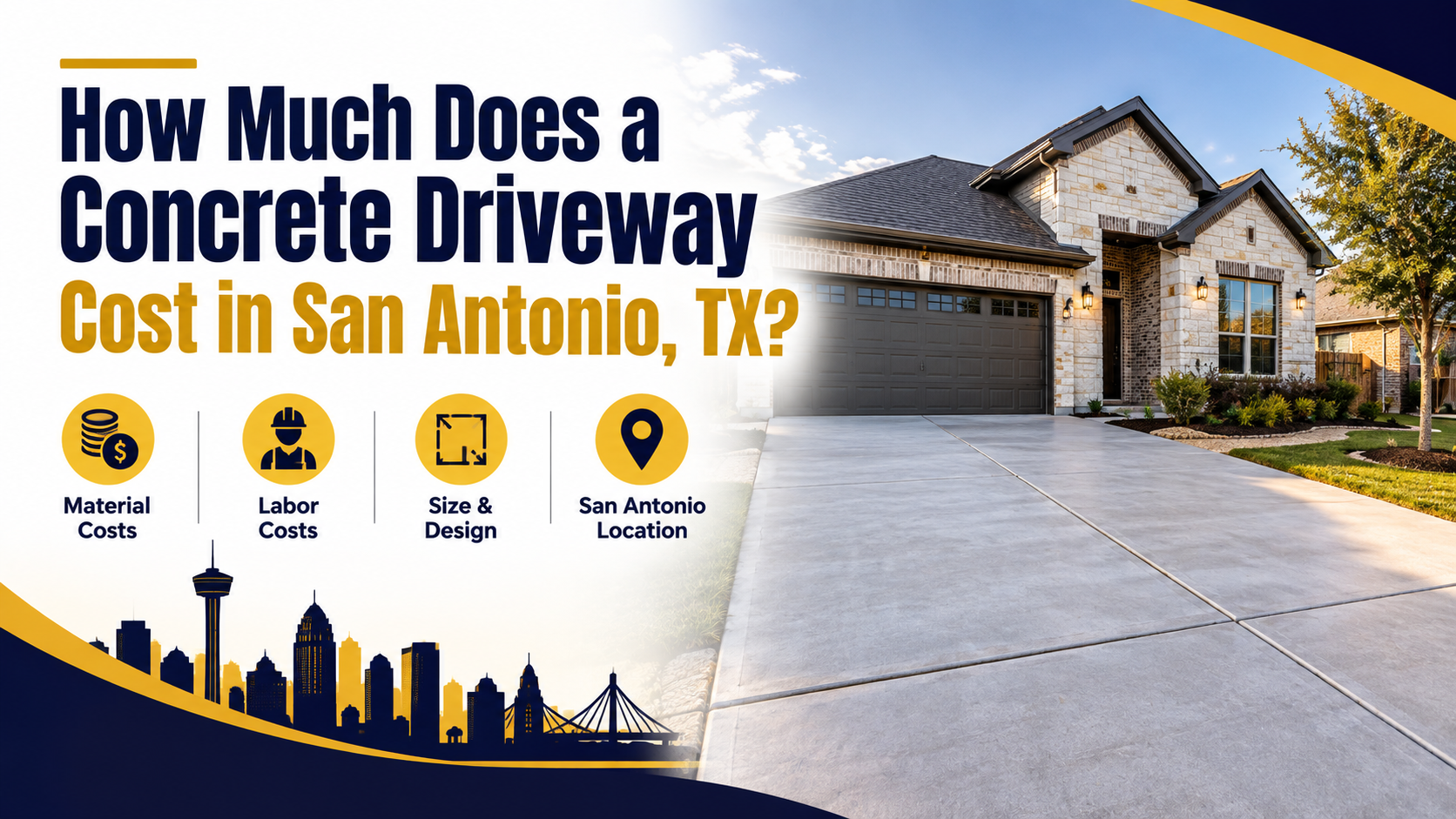
A: Costs vary by type: plain concrete $4–$8/sq ft, colored $6–$15/sq ft, exposed aggregate $8–$16/sq ft, stamped $12–$22/sq ft. For a standard two-car driveway (600 sq ft), expect $2,400–$13,200 depending on type. Contact Easter Concrete for a free on-site quote.
Q: Is stamped concrete slippery when wet?
A: Stamped concrete can be slippery when wet, especially with a high-gloss sealer. The fix is simple: always request a non-slip additive (shark grip or aluminum oxide) mixed into the sealer. Any reputable contractor including Easter Concrete will recommend this for driveway applications.
Q: Can I add color to an existing concrete driveway?
A: Yes. Acid staining, water-based dyes, and concrete overlays can refresh the look of an existing slab without full removal. Note: stamped patterns and exposed aggregate cannot be applied retroactively. They require fresh poured concrete.