

Concrete Patio Finishes: Broom vs Smooth vs Exposed Aggregate
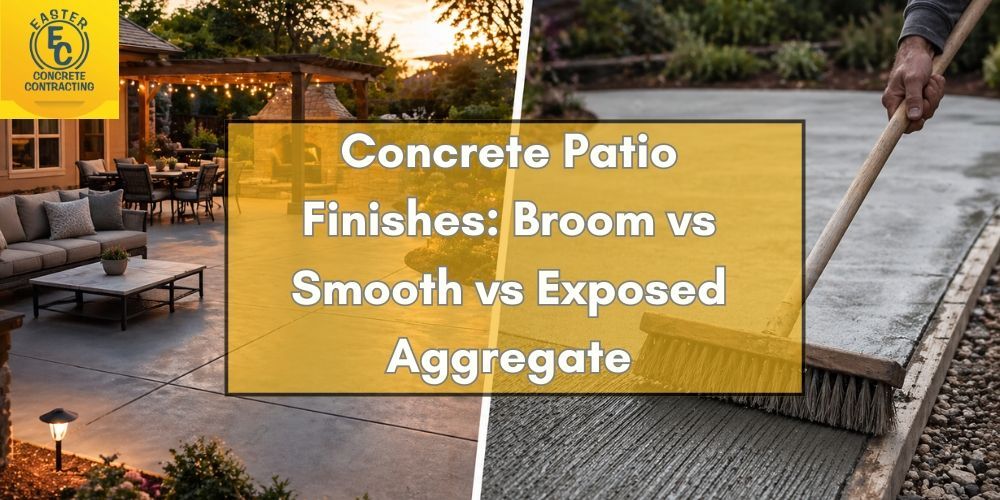
Most homeowners spend weeks choosing furniture, lighting, and landscaping for their backyard, and less than five minutes choosing a concrete patio finish. That's a mistake that can cost thousands to fix.
The finish you choose affects how safe your patio is on a rainy afternoon, how it holds up through brutal 100°F summers, how much time you'll spend maintaining it, and how your home looks from the street. A poor choice leads to a slippery surface, stress cracks within a year, or a dull slab that drags down your curb appeal.
The three most common finishes used for patios are broom finish, smooth finish, and exposed aggregate. Each option offers unique benefits based on your style preferences and how you plan to use your backyard concrete patio.
What Is a Concrete Patio Finish?
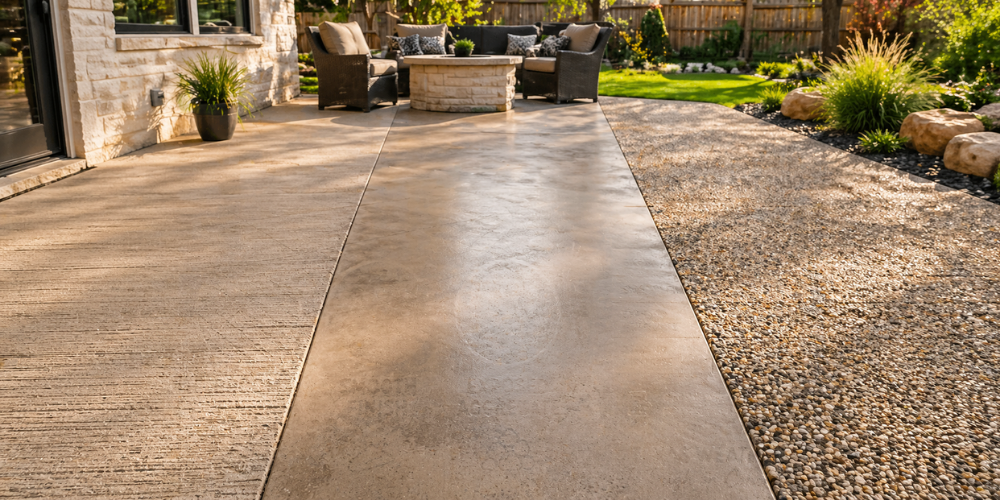
A concrete patio finish is the texture or treatment applied to the surface of a concrete slab during or immediately after pouring. It is not just decorative. The finish directly determines:
- Traction and slip resistance are especially critical near pool decks and garden areas
- How quickly does water drain after rain clears the surface
- Maintenance frequency: how often you'll need to clean and reseal
- Aesthetic style from utilitarian to high-end decorative
- Long-term durability, how well the surface handles heat cycles, UV exposure, and heavy foot traffic
Three finishes dominate residential concrete patio installation: broom finish, smooth finish, and exposed aggregate. A fourth option, stamped concrete, blends decorative patterning with one of these base textures and is covered in its own section below.
Local Climate: Why It Changes Everything
Before comparing finishes, you need to understand the local environment. Climate is uniquely demanding on outdoor concrete:
Extreme heat. Summer temperatures regularly exceed 100°F. Concrete expands in heat and contracts at night. Over the years, this thermal cycling stresses the surface and causes hairline cracks, especially in finishes that were poorly sealed or lack adequate control joints.
Flash rainstorms. averages 31 inches of rain per year, often arriving as short, intense downpours. A wet smooth-finish patio becomes dangerously slippery in seconds. This is why slip resistance is a non-negotiable feature for any exposed patio surface in Bexar County.
UV exposure. The intense Texas sun fades decorative coloring, degrades unsealed concrete, and accelerates surface wear. Certain finishes, particularly exposed aggregate, hold their color and texture better under prolonged UV exposure than others.
Clay-heavy soil. Much of it sits on expansive clay soil that shifts with moisture changes. This movement puts pressure on slabs from below. Proper base preparation and control joint placement matter as much as the finish on top.
Understanding these conditions will help you see why contractors here consistently recommend textured finishes over smooth ones for exposed outdoor areas.
Why the Right Concrete Patio Finish Matters
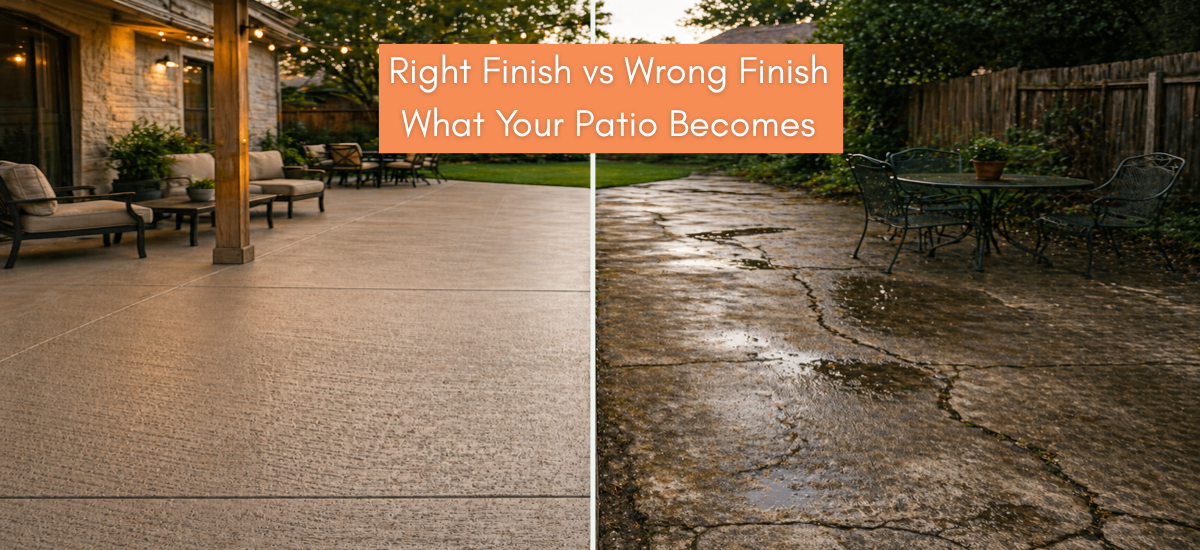
The finish of your patio affects more than appearance. It also determines how comfortable and safe the surface will be in everyday use.
Factors Influenced by Patio Finish
| Filter | Why It Matters |
|---|---|
| Slip Resistance | Important for patios exposed to rain or pool areas. |
| Maintenance | Some finishes are easier to clean than others. |
| Comfort | Texture can affect how comfortable the surface feels underfoot. |
| Design Style | Different finishes support different concrete patio ideas. |
Contractor Tip:
If your patio is located near a pool or garden, textured surfaces often provide better traction than completely smooth finishes
Broom Finish Concrete Patio
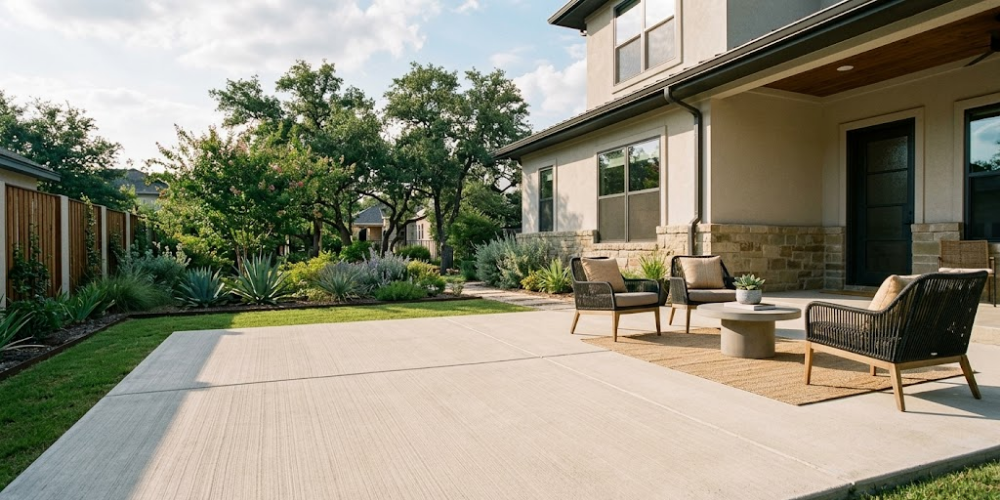
What it is
A broom finish is created by dragging a stiff-bristled broom across freshly poured concrete before it fully sets. The bristles leave shallow parallel grooves in the surface, creating a textured, non-slip profile.
It is the most widely used concrete patio finish across Texas. The reason is simple: it works exceptionally well in this climate at a price that fits most budgets.
Features of a Broom Finish Patio:
| Features | Details |
|---|---|
| Texture | Light grooves created by a broom |
| Slip Resistance | High |
| Appearance | Simple and functional |
| Maintenance | Moderate cleaning required |
Pros
- The highest slip resistance of the three common finishes
- Lowest cost per square foot
- Durable under heat and UV exposure
- Fast installation, no specialty skills required
- Works well with decorative add-ons like colored concrete or border detailing
Cons
- Grooves collect dirt, pollen, and organic debris
- Less visually striking than aggregate or stamped options
- Limited design variety on its own
Best for
Families with children or pets, large open patio areas, poolside decks, any space exposed to rain, and homeowners prioritising durability over aesthetics.
Contractor tip from Easter Concrete Contracting: The direction of the broom stroke matters. Aligning grooves perpendicular to foot traffic flow gives a better grip underfoot. Diagonal patterns look more interesting but require slightly more care during installation.
Smooth Finish Concrete Patio
What it is
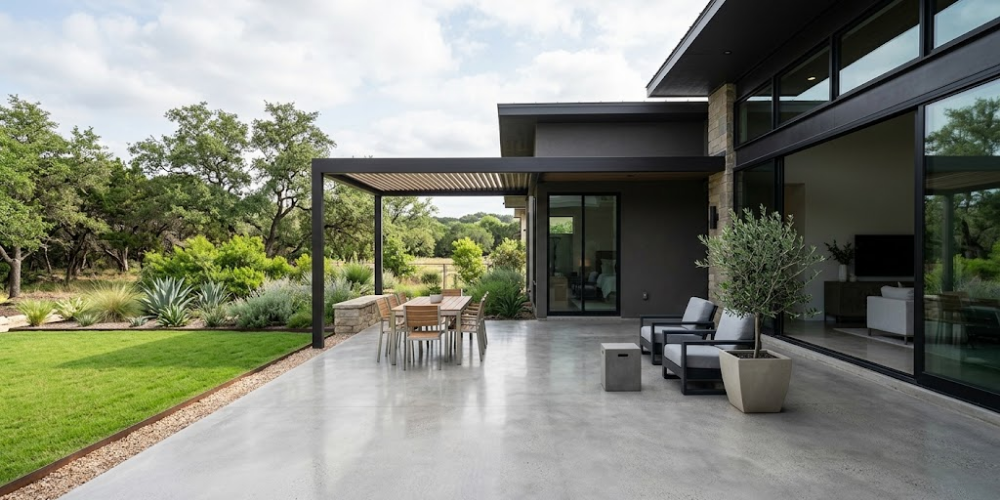
Smooth concrete can also support decorative upgrades such as stamped concrete patios, decorative staining, sealed finishes, and outdoor patio tiles over concrete. If you’re exploring decorative patterns, you can also review these
gorgeous stamped concrete patio options
for your space to see how different textures and designs can enhance a modern patio.
Features of a Smooth Finish Patio:
| Features | Details |
|---|---|
| Texture | Flat and smooth surface |
| Appearance | Modern and clean |
| Maintenance | Easy to sweep and wash |
| Slip Resistance | Moderate when wet |
Pros
- Clean, modern, high-end appearance
- Easiest to sweep and wash
- Excellent base for decorative overlays, staining, or tile
- Compatible with stamped concrete patio designs
- Ideal for covered, low-traffic indoor-outdoor transitions
Cons
- Slippery when wet, not suitable for uncovered patios without anti-skid treatment
- Surface imperfections and scratches show more clearly
- Requires more frequent sealing to prevent staining and moisture penetration
Best for
Covered patios and pergola areas, modern home designs, interior-to-exterior transitions, and any application where a tile or stained concrete overlay is planned.
Contractor tip from Easter Concrete Contracting: If you love the look of smooth concrete but your patio is exposed to rain, ask about a clear anti-slip sealant with silica carbide aggregate. It preserves the clean aesthetic while adding meaningful traction.
Exposed Aggregate Patio
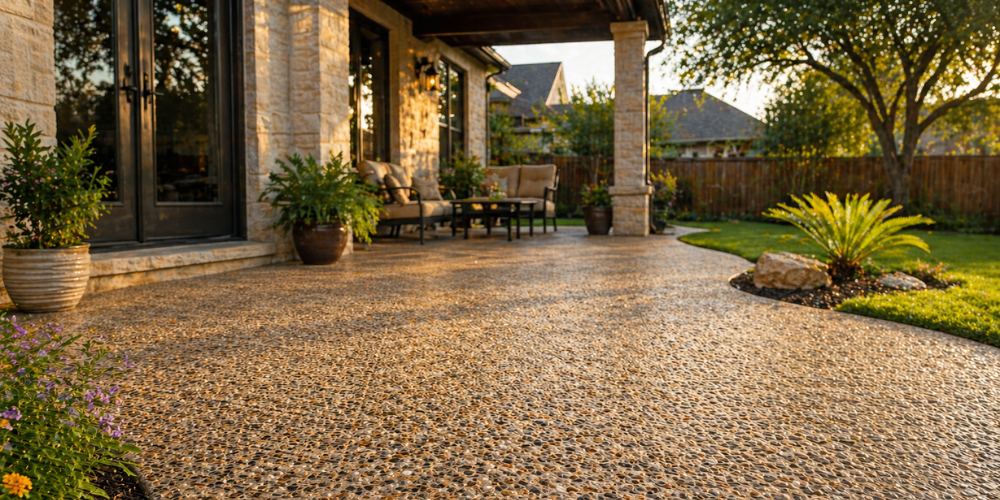
What it is
An exposed aggregate finish reveals the natural stones, pebbles, or decorative chips embedded in the concrete mix. During installation, the surface cement paste is washed away or chemically retarded before the concrete sets, exposing the aggregate layer beneath. The result is a rich, textured surface that resembles natural stone.
| Features | Details |
|---|---|
| Texture | Natural stone surface |
| Appearance | Decorative and unique |
| Slip Resistance | High |
| Durability | Strong and weather-resistant |
The higher cost reflects the more complex installation process and the cost of decorative aggregate materials.
Pros
- Premium decorative appearance looks like natural stone
- Excellent slip resistance, comparable to broom finish
- Highly UV-resistant color stays consistent for years
- Strong and durable in all weather conditions
- Adds significant visual value and curb appeal
- Customisable stone color, size, and mix can be selected
Cons
- Rougher underfoot, uncomfortable for bare feet in some applications
- Higher installation cost
- Repairs require matching the original aggregate mix, which can be difficult years later
- More complex installation; requires experienced contractors
Best for
Outdoor entertaining areas, pool decks, front-of-home patio areas, decorative backyard spaces, and homeowners who want a premium look with high performance.
Contractor tip from Easter Concrete Contracting: Always review physical aggregate samples before pouring. Photographs don't accurately represent how a mix looks in full sunlight on a large slab. We bring samples to every client consultation, so you know exactly what you're getting.
Broom vs Smooth vs Exposed Aggregate: Quick Comparison
| Feature | Broom Finish | Smooth Finish | Exposed Aggregate |
|---|---|---|---|
| Cost per sq ft | $6 – $10 | $8 – $14 | $10 – $18 |
| Slip resistance | ★★★★★ High | ★★☆☆☆ Low (wet) | ★★★★★ High |
| Appearance | Functional / Basic | Modern / Elegant | Decorative / Premium |
| Maintenance effort | Low – Medium | Medium | Medium |
| UV / heat resistance | High | Medium | Very High |
| Bare-foot comfort | Moderate | High | Lower |
| Best setting | Open patios, pools | Covered patios | Entertaining areas |
| DIY-friendly repairs | Yes | Yes | |
| Ideal home style | Any | Modern / Contemporary | Any |
How to Choose the Right Finish for Your Home
Use this decision guide based on your specific situation:
Choose broom finish if:
- Your patio is fully exposed to rain
- You have children, elderly family members, or pets
- You are working within a tighter budget
- You want a low-maintenance long-term surface
- You need a large area covered cost-effectively
Choose smooth finish if:
- Your patio is fully covered by a roof, pergola, or patio cover
- You are planning to install tile, decorative overlays, or staining on top
- You prioritise a modern, clean aesthetic
- You are willing to add a non-slip sealant for safety
Choose exposed aggregate if:
- You want a premium decorative finish with no sacrifice in safety
- Your patio is used for outdoor entertaining
- You want a surface that holds its appearance over many years
- Your property is in a higher-end neighbourhood where curb appeal matters
- You are near a pool or a frequently wet area
Choose stamped concrete if:
- Visual drama is your primary goal
- You understand the resealing commitment
- You want to replicate the look of expensive pavers or natural stone
Concrete Patio Finish Comparison
If you prefer a quick visual understanding, this simple breakdown makes it easier to compare each concrete patio finish side by side.
At-a-Glance Comparison
- Broom Finish
- Best for safety and budget
- Textured surface for grip
- Ideal for large backyard concrete patios
- Smooth Finish
- Best for modern and clean designs
- Sleek appearance
- Works best in covered patios
- Exposed Aggregate
- Best for a premium outdoor look
- Natural stone texture
- Strong grip and long-term durability
Key Takeaway
If your patio is exposed to weather, textured finishes like broom and exposed aggregate perform better over time. Smooth finishes are better suited for covered or decorative areas.
Concrete Patio Installation: What to Expect
Regardless of which finish you choose, the installation process follows the same core steps. Understanding this helps you evaluate quotes and ensure quality work.
1. Site assessment and preparation. The area is measured, existing vegetation or old slabs are removed, and the ground is graded to ensure proper drainage slope, typically a minimum 1/8 inch drop per foot away from your home's foundation.
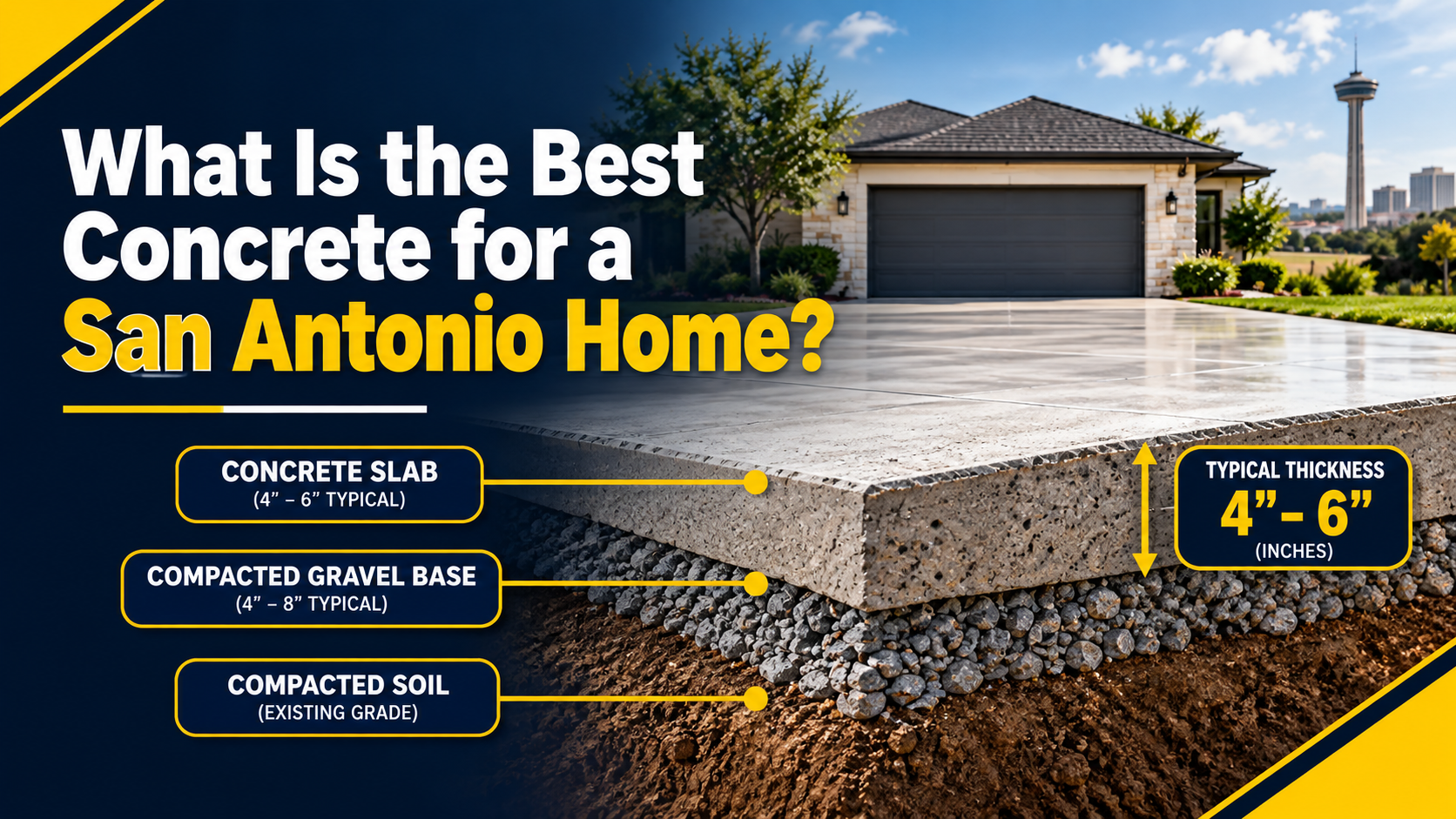
2. Base preparation. A compacted gravel base is laid to provide drainage and stability. In clay-heavy soils, this step is critical to preventing slab heaving over time.
3. Form setting. Wooden or metal forms define the edges of the slab and establish the finished height.
4. Reinforcement. Rebar or wire mesh is placed within the forms to give the slab tensile strength and reduce cracking.
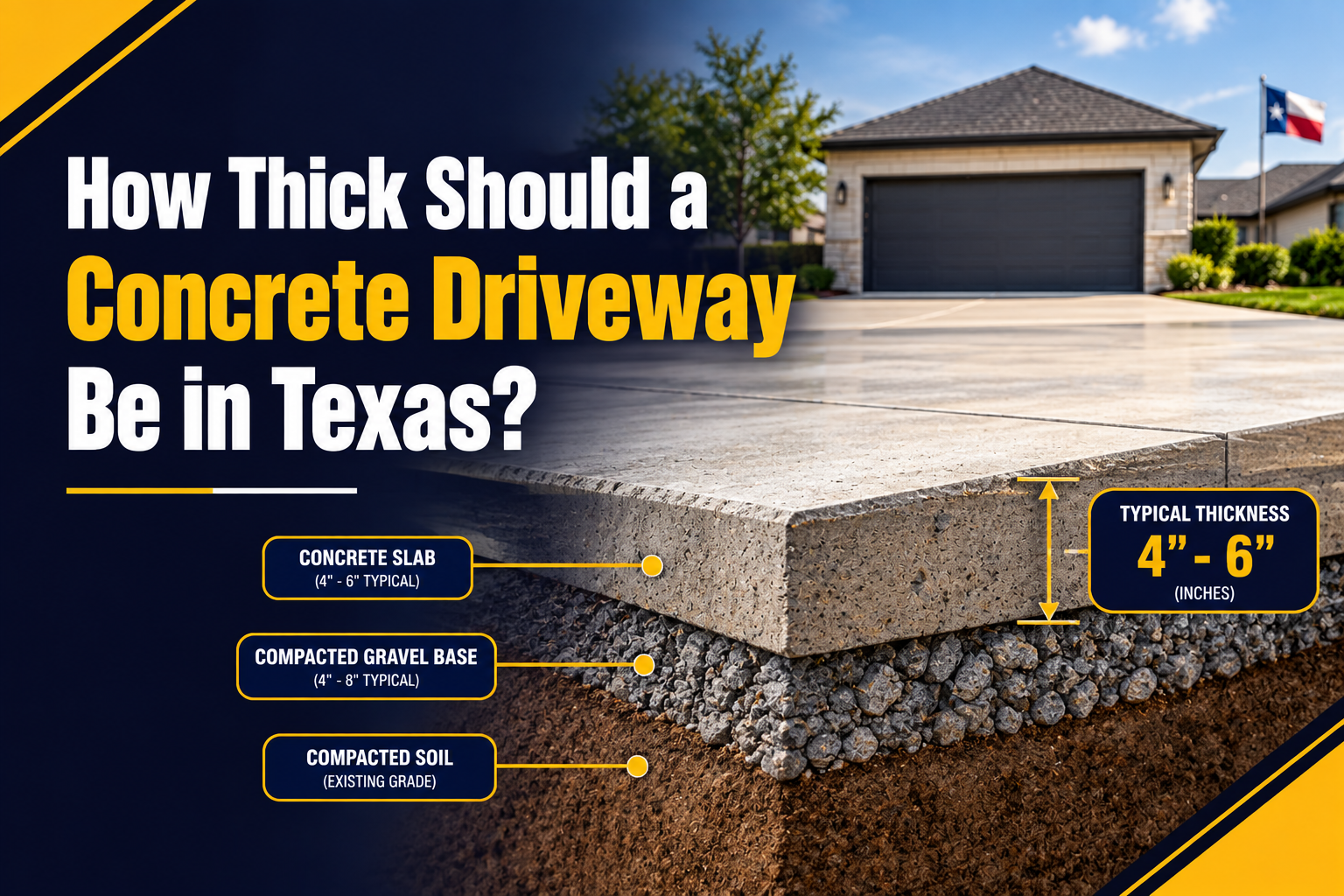
5. Concrete pouring and screeding. Concrete is poured and leveled using a screed board. Thickness for a residential patio is typically 4 inches; areas subject to heavier loads (vehicles, large gatherings) may be poured at 5–6 inches.
6. Finish application. This is where broom texture, troweling, or aggregate exposure takes place. Timing is critical; work on a concrete surface must happen within a specific window before it sets.
7. Control joint cutting. Joints are cut into the slab at regular intervals (typically every 8–10 feet) to give the concrete a predetermined place to crack as it expands and contracts. Without joints, cracks appear randomly and visibly.
8. Curing. The slab must cure undisturbed for at least 24–48 hours before light foot traffic and 28 days before full curing. Rushing this stage causes surface weakness.
9. Sealing. A quality sealant protects the surface from moisture, staining, UV fading, and surface wear. Application timing varies by finish.
Patio Maintenance by Finish Type
Broom finish maintenance schedule
- Weekly: Sweep debris, especially from grooves
- Monthly: Hose down with water
- Seasonally: Pressure wash with a concrete-safe cleaner
- Every 2–3 years: Apply fresh penetrating sealant
Smooth finish maintenance schedule
- Weekly: Sweep or blow off debris
- Monthly: Mop with mild soap and water
- Seasonally: Inspect sealant condition, smooth surfaces show sealant wear faster
- Every 1–2 years: Reseal more frequently than textured finishes
Exposed aggregate maintenance schedule
- Weekly: Blow or sweep debris from aggregate gaps
- Monthly: Rinse with water
- Seasonally: Pressure washers use a fan tip, not a concentrated jet, to avoid dislodging aggregate
- Every 2–3 years: Apply penetrating sealer formulated for exposed aggregate
Concrete Patio Cost
Several factors affect total project cost beyond the base finish price:
| Cost Factor | Impact |
|---|---|
| Patio size | Larger slabs cost more but cost less per sq ft |
| Site accessibility | Tight side yards or slopes increase labor time |
| Excavation depth | Clay soils sometimes require deeper removal |
| Base preparation | Gravel base depth affects material cost |
| Decorative upgrades | Color, borders, and patterns add $1–$5 per sq ft |
| Sealing | Initial seal typically included; budget $0.50–$1.50 per sq ft for future applications |
| Permits | May require permits for patios over certain sizes. Verify with your contractor |
Estimated total project costs for a 400 sq ft patio
| Finish | Estimated Total Cost |
|---|---|
| Broom finish | $2,400 – $4,000 |
| Smooth finish | $3,200 – $5,600 |
| Exposed aggregate | $4,000 – $7,200 |
| Stamped concrete | $4,800 – $8,000 |
Stamped Concrete vs Exposed Aggregate Patio
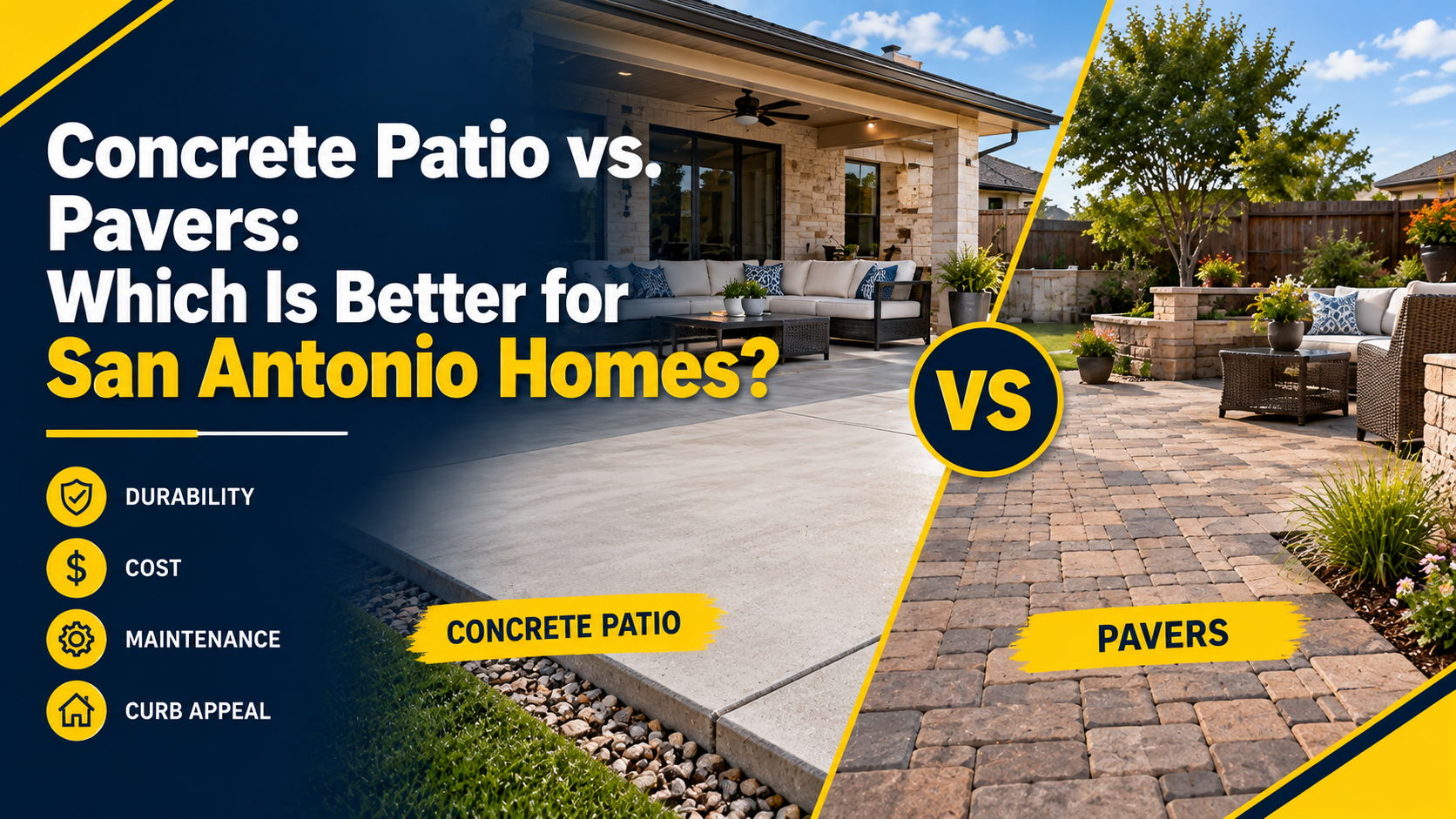
Many homeowners compare stamped concrete patios with exposed aggregate surfaces when choosing decorative finishes.
| Finish | Stamped Concrete Patio | Exposed Aggregate Patio |
|---|---|---|
| Appearance | Patterned designs like brick or stone | Natural stone texture |
| Design Style | Decorative patterns | Organic and natural look |
| Maintenance | May require resealing | Durable with minimal upkeep |
| Best Use | Decorative patios | Slip-resistant outdoor areas |
Contractor Tip:
Discuss maintenance requirements with your contractor before choosing a decorative finish. Some surfaces may require periodic resealing to maintain their appearance.
Conclusion
Choosing the right concrete patio finish is about more than aesthetics. It is a long-term investment that needs to hold up against intense heat, UV exposure, sudden rainstorms, and years of daily use.
For most homeowners, broom finish delivers the best combination of safety, durability, and value. If budget allows and visual impact matters, exposed aggregate is the standout choice, offering a premium appearance without compromising on the slip resistance that climate demands. Smooth finish belongs on covered patios only.
Whatever you choose, the quality of installation matters as much as the finish itself. Proper base preparation, correct joint placement, adequate thickness, and timely sealing are what separate a patio that lasts 30 years from one that starts cracking in five.
Easter Concrete Contracting has been building patios for over three decades. We know this soil, this climate, and what it takes to build a surface that lasts.
FAQ
FAQs
Which concrete patio finish is best for outdoors?
Broom and exposed aggregate are best due to slip resistance and durability.
What is the most affordable concrete patio option?
Broom finish is the most cost-effective.
Is exposed aggregate better than stamped concrete?
It depends. Exposed aggregate is more durable, while stamped concrete focuses on design.
How long does a concrete patio last?
A well-installed concrete patio can last 25 to 30 years.