


How to Repair Cracks in a Concrete Driveway: 2026 DIY Guide
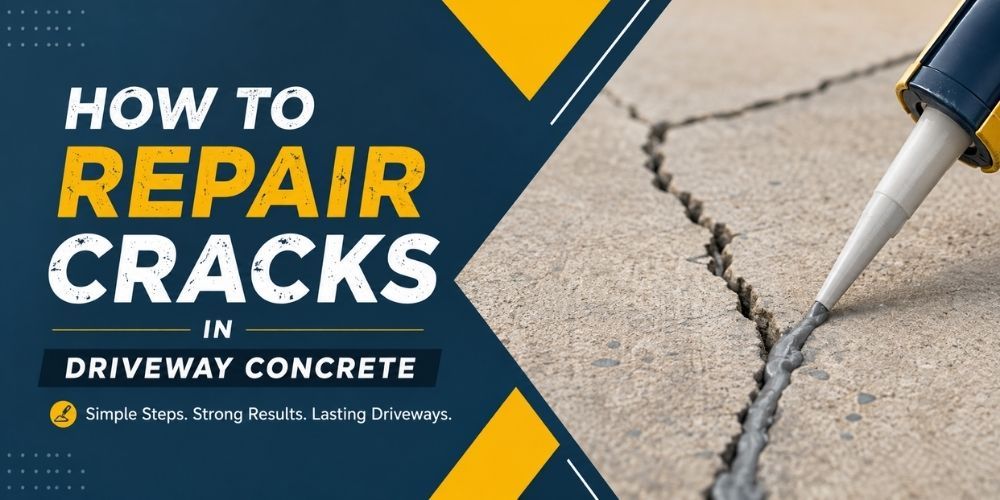
That crack running across your driveway might be harmless, or it could be the first sign that the slab underneath is moving. The difference isn't always obvious just by looking at it.
Concrete driveway crack repair starts with understanding
why the concrete cracked instead of simply filling the opening. A narrow, stable crack may need only cleaning and sealing, while a wide, uneven crack with crumbling edges or a sinking slab can point to a much larger problem.
This guide explains how to identify common driveway cracks, what causes them, how to repair suitable cracks, when larger damage needs professional attention, what repairs can cost, and whether a permit may be required.
Look at the Crack, Not Just the Crack
Before buying a crack filler, inspect the entire driveway.
Check:
- Crack width and apparent depth
- Whether both sides are level
- Whether the crack is getting wider
- Crumbling or damaged edges
- Other cracks nearby
- Water pooling around the area
- Soil or gravel visible beneath the slab
- Signs of sinking or lifting
A small crack that has stayed the same size for years is very different from one that continues widening.
Quick Crack Decision Guide
| What You See | What It May Mean | What to Consider |
|---|---|---|
| Hairline surface cracks | Shrinkage or aging | Monitor or seal |
| Small, stable crack | Localized damage | Fill or seal |
| Wide or deep crack | More significant damage | Inspect before repairing |
| Uneven crack | Slab movement | Professional evaluation |
| Crumbling concrete | Surface deterioration | Repair or replace section |
| Multiple connected cracks | Broader deterioration | Assess the entire driveway |
| Crack keeps reopening | Ongoing movement | Find the underlying cause |
Crack width matters, but it isn't the only factor. A relatively narrow crack with noticeable movement can be more concerning than a wider crack that has remained stable.
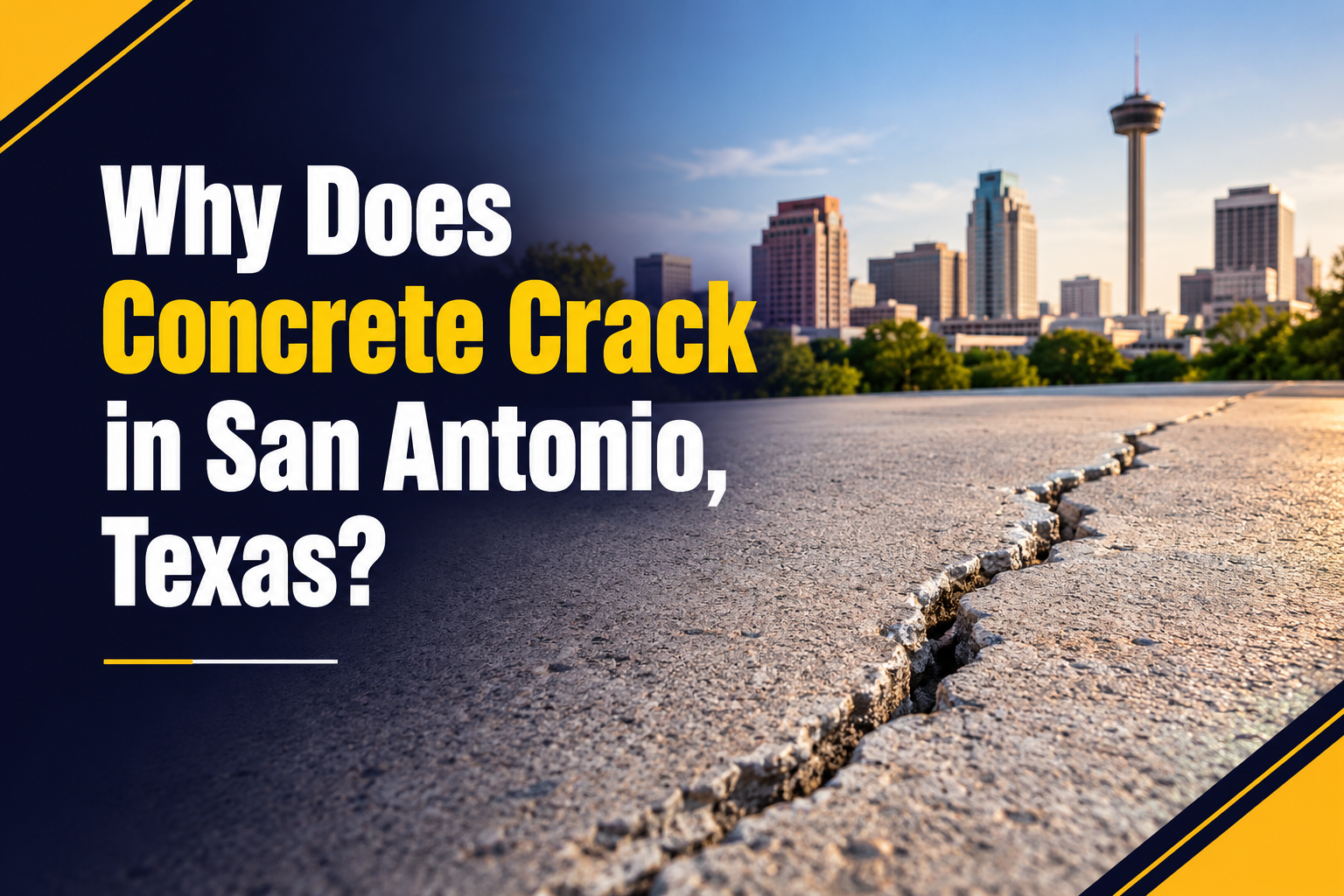
What Causes Concrete Driveway Cracks?
Knowing the cause helps determine whether
repair cracks in concrete driveway surfaces is enough or whether the problem requires more extensive work.
Concrete Shrinkage
Concrete naturally loses moisture as it cures. That process can create fine surface cracks. When the slab is otherwise sound, these cracks may be primarily cosmetic.
Soil Settlement
If the soil beneath the driveway settles unevenly, sections of concrete can lose support and crack. You may also notice low spots, uneven slabs, or widening cracks.
Filling the opening won't correct movement underneath the concrete.
Poor Drainage
Water can contribute to erosion and settlement beneath a driveway.
Look for standing water, washed-out soil, downspouts discharging beside the slab, or areas that remain wet after rain.
Freeze-Thaw Cycles
In colder climates, water entering a crack can freeze and expand. Repeated cycles can gradually widen existing damage.
Tree Roots
Roots growing beneath or against concrete can contribute to lifting and cracking, particularly near mature trees.
Heavy Loads or Installation Problems
Repeated heavy loads can stress concrete, while problems such as poor base preparation, inadequate compaction, excess water in the mix, or improper curing can contribute to premature cracking.
How to Repair Cracks in a Concrete Driveway
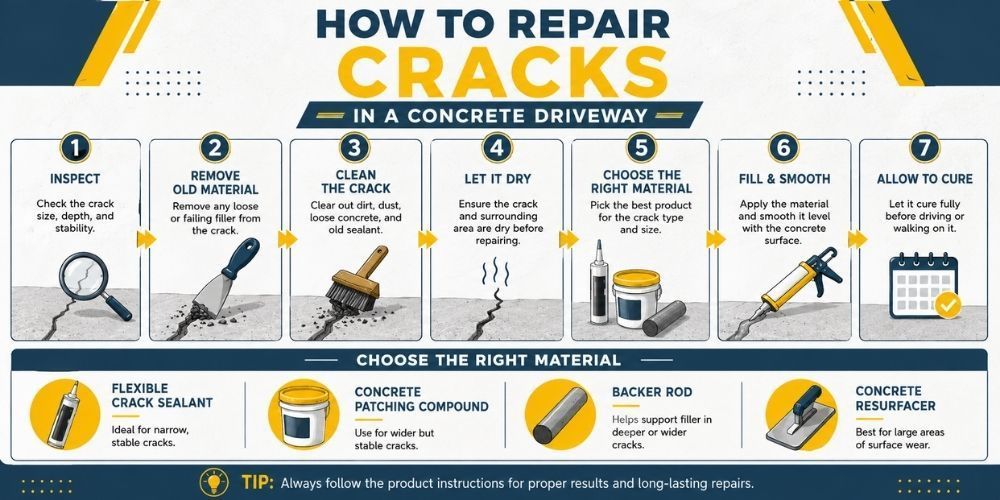
If the crack is small, stable, and surrounded by sound concrete, how to repair cracks in concrete driveway surfaces is relatively straightforward.
1. Inspect the Crack
Check its width, depth, stability, and surrounding concrete. If one side has shifted or the driveway is sinking, don't treat it as a simple surface repair.
2. Remove Old Material
If the crack was previously repaired, remove loose or failing filler before applying anything new.
3. Clean the Crack
Remove dirt, grass, dust, loose concrete, and old sealant. A wire brush and shop vacuum can help prepare the opening.
4. Let It Dry
Many repair products require a clean, dry surface. Follow the manufacturer's temperature and moisture requirements.
5. Choose the Right Material
- Flexible crack sealant: Suitable for many narrow cracks.
- Concrete patching compound: Can work for certain wider, stable cracks.
- Backer rod: Used in some deeper or wider cracks before applying compatible filler.
- Concrete resurfacer: Better suited to widespread surface deterioration rather than one isolated crack.
6. Fill and Smooth
Apply the material according to the product instructions and finish it appropriately with the surrounding concrete.
7. Allow It to Cure
Don't drive over the repair simply because the surface feels dry. Follow the manufacturer's instructions for vehicle and foot traffic.
How to Repair Large Cracks in a Concrete Driveway
When considering how to repair large cracks in concrete driveway surfaces, don't start with the filler. Start by checking for movement.
Check for Unevenness
Place a straightedge across the crack. If one side is noticeably higher or lower, the slab may have shifted.
Check the Depth
A wide crack can extend farther beneath the surface than it appears. Some deeper cracks may require backer rod before a compatible repair material is applied.
Check the Surrounding Concrete
Look for:
- Spalling
- Crumbling edges
- Missing pieces
- Exposed aggregate
- Additional cracks
- Soil underneath the slab
Find the Cause
Settlement, drainage, tree roots, and other underlying problems can cause a repair to fail again.
A large crack does not automatically mean the entire driveway needs replacement. The condition of the surrounding slab and whether the concrete is moving are equally important.
When Is Driveway Crack Repair Not Enough?
Sometimes another patch isn't the right answer.
Watch for these warning signs:
- The same crack keeps reopening
- One side of the crack is higher
- The driveway is sinking
- Cracks are spreading across the slab
- Concrete is crumbling or spalling
- Water continues pooling around the damaged area
- Previous repairs have repeatedly failed
These conditions can indicate that the problem extends beyond the visible crack.
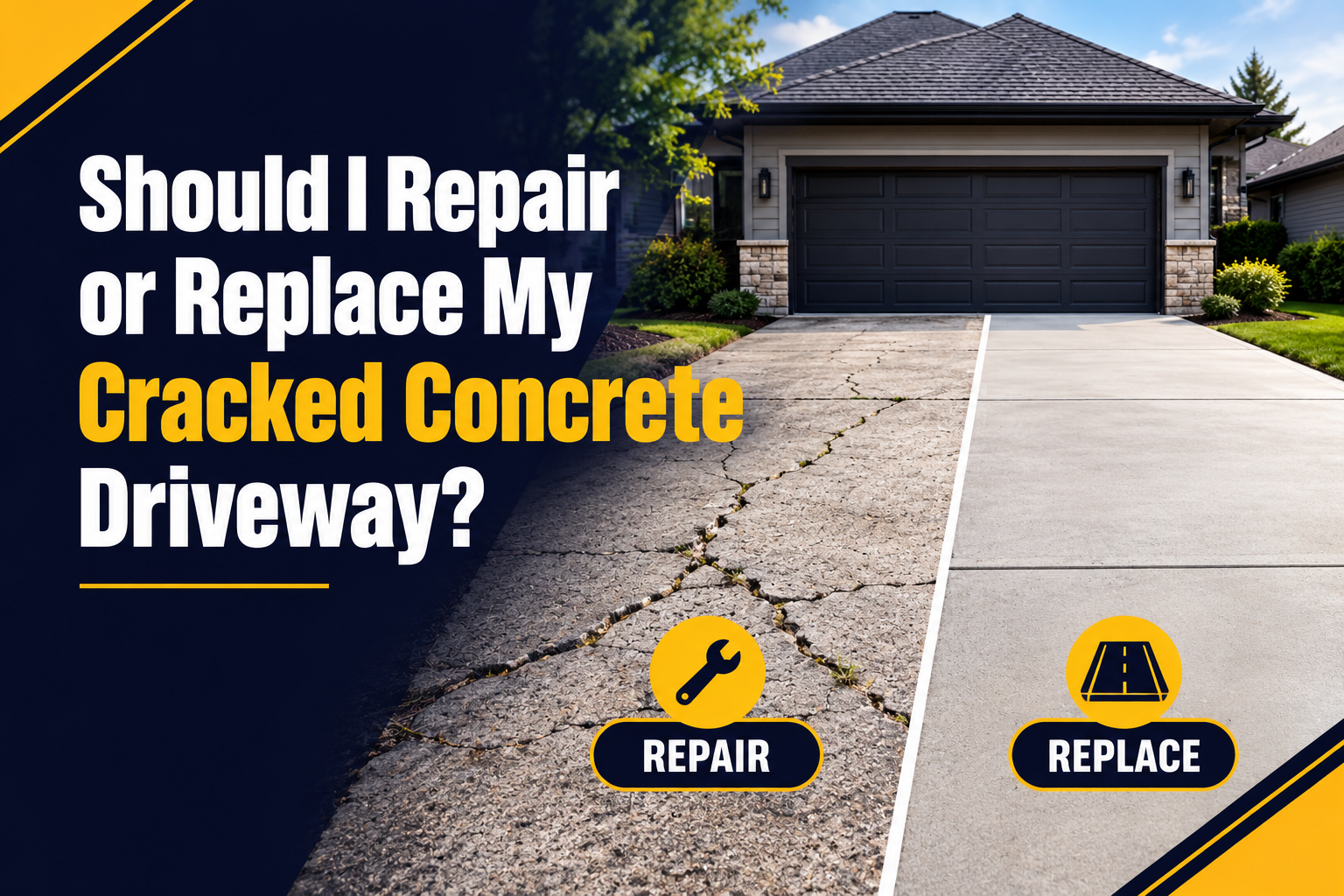
Repair vs. Partial Replacement vs. Full Replacement
| Driveway Condition | Possible Solution |
|---|---|
| Few small, stable cracks | Crack repair |
| Localized wider damage | Appropriate repair method |
| One badly damaged section | Partial replacement |
| Localized settlement | Correct underlying problem |
| Multiple displaced sections | More extensive repair or replacement |
| Widespread cracking and deterioration | Replacement may be practical |
The goal isn't simply to choose the cheapest option today. It's to avoid paying repeatedly for a repair that doesn't solve the underlying problem.
How Much Does Concrete Driveway Crack Repair Cost?
The price depends on the size of the crack, number of damaged areas, preparation required, repair method, labor, accessibility, and local market rates.
DIY Repair
A small DIY repair may require only:
- Crack filler or sealant
- Cleaning supplies
- Backer rod, if appropriate
- Application tools
Material costs can be relatively low for isolated cracks.
Professional Repair
Professional work may involve a minimum service charge rather than a simple per-foot price. Larger jobs can also require concrete removal, surface preparation, drainage correction, or partial replacement.
Don't rely on an online price as a guaranteed quote. Local conditions and the actual condition of the driveway can change the final cost substantially.
A cheap repair that fails repeatedly may cost more over time than addressing the underlying problem correctly.
| Repair Option | Typical Cost Range | Best For | What May Affect the Cost |
|---|---|---|---|
| DIY Crack Filling | $10–$50 | Small, stable cracks | Crack length, filler type, tools needed |
| Professional Crack Repair | $150–$500+ | Wider or multiple cracks | Labor, crack size, preparation, accessibility |
| Deep Crack Repair | $200–$600+ | Deeper or wider cracks | Backer rod, patching material, surface preparation |
| Partial Concrete Replacement | $500–$2,000+ | Severely damaged sections | Removal, disposal, base preparation, new concrete |
| Full Driveway Replacement | $3,000–$10,000+ | Widespread cracking or deterioration | Driveway size, demolition, grading, reinforcement, finish |
Note: These are general planning ranges, not guaranteed prices. Actual costs vary by location, driveway size, damage severity, labor rates, accessibility, and the repair method required.
Do You Need a Permit to Repair a Concrete Driveway?
Not always. Permit requirements depend on your location and the scope of the work.
A minor crack repair on private property may be treated differently from replacing the entire driveway or changing a curb, sidewalk, driveway approach, drainage, grade, or public right-of-way.
Before major work, check with your local building department or public works authority.
Ask about permits if you're:
- Replacing a large portion of the driveway
- Changing its dimensions or slope
- Modifying drainage
- Altering a curb or sidewalk
- Rebuilding a driveway approach
- Working within a public right-of-way
- Changing access to a public road
Don't assume rules from another city apply to your property. Local requirements can vary.
Common Driveway Crack Repair Mistakes
Avoid these common problems:
- Filling an actively moving crack without finding the cause
- Ignoring drainage problems
- Using the same product for every crack
- Applying filler over loose or dirty concrete
- Repeating a repair that has already failed
- Assuming every crack requires replacement
- Assuming every crack can be fixed with filler
The most important step is diagnosis.
Final Thoughts
Cracks are a normal part of concrete aging, but leaving them untreated can allow small problems to become larger and more expensive. Minor surface damage may be manageable with a DIY approach, while widening, deep, or recurring cracks can signal underlying issues. Easter Concrete Contracting helps homeowners restore damaged driveway surfaces with practical, long-lasting solutions designed to improve safety, durability, and curb appeal.
Diagnose before you patch.
Look at the crack, inspect the surrounding concrete, consider drainage and ground conditions, and determine whether you're dealing with a surface defect or a driveway that is beginning to fail. If you're planning substantial repair or replacement, check with your local building or public works department before starting work to determine whether permits or right-of-way requirements apply.
Frequently Asked Questions
How do you repair cracks in a concrete driveway?
By cleaning the crack, applying the appropriate repair material, smoothing the surface, and allowing proper curing time.
Can large cracks in a concrete driveway be repaired?
Some large cracks can be temporarily repaired, but recurring or deep cracks often require professional solutions.
How long does driveway crack repair last?
With proper materials and sealing, repairs can last several years.
Does heat cause cracks in concrete driveways?
Yes. Prolonged heat causes concrete to expand, which can lead to cracking—especially in areas with unstable soil.
Is it cheaper to repair or replace a concrete driveway?
Repairing is usually cheaper by addressing isolated cracks early, while replacement becomes necessary when damage is widespread, structural, and no longer cost-effective to fix.