


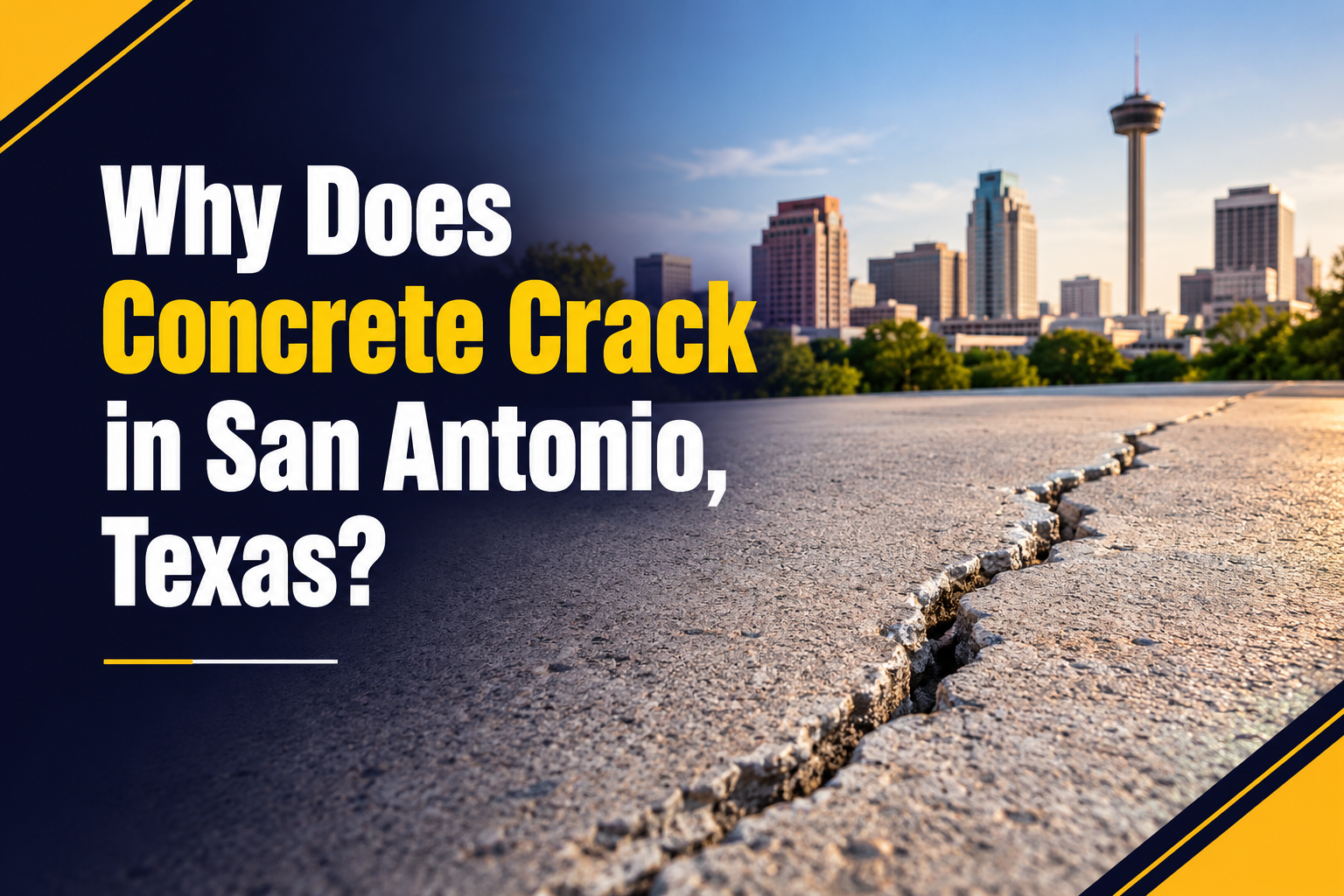
Why Does Concrete Crack in San Antonio, Texas?
This is a subtitle for your new post
Why does concrete crack?
It's one of the most common questions homeowners ask after noticing a line running across their driveway, patio, sidewalk, or concrete slab.
Concrete can crack for many reasons, including normal shrinkage, soil movement, drainage problems, improper site preparation, temperature changes, heavy loads, and age.
Understanding why it happened is the first step toward determining what to do next.
Does Texas Heat Cause Concrete to Crack?
Temperature can contribute to stress on concrete.
San Antonio experiences periods of significant heat, and exterior concrete is continually exposed to changing temperatures and weather conditions.
Concrete naturally expands and contracts as conditions change. Proper installation techniques, including strategically placed joints, can help manage movement and encourage cracking to occur in controlled locations.
Can San Antonio Soil Cause Concrete Problems?
Soil conditions can play an important role in concrete performance.
When the soil beneath concrete expands, contracts, settles, or isn't adequately prepared, the concrete above it may move.
That's why concrete installation isn't simply about pouring material into forms.
What happens underneath the concrete matters.
Site preparation should be evaluated based on the specific property and project.
Can Water and Poor Drainage Damage Concrete?
Water management is another important consideration.
Poor drainage can contribute to erosion or changes in the supporting soil around and underneath concrete surfaces.
If water repeatedly collects beside a driveway, patio, walkway, or foundation area, the underlying conditions should be evaluated rather than focusing exclusively on the visible crack.
Correcting a surface problem without understanding its cause may not solve the larger issue.
Does Cracked Concrete Always Need to Be Replaced?
No.
A crack doesn't automatically mean an entire concrete surface needs replacement.
The appropriate solution depends on factors such as the crack's width, depth, location, movement, surrounding settlement, and the overall condition of the concrete.
Some situations may be candidates for repair.
Other projects involving significant deterioration, movement, or multiple problems may justify considering replacement.
A professional inspection can help determine the available options.
Why Are Joints Put in Concrete?
Control joints are intentionally incorporated into many concrete installations to help manage cracking caused by shrinkage and movement.
Concrete naturally changes as it cures and responds to environmental conditions.
Proper joint placement gives the concrete planned locations where movement can occur.
How Can I Help Prevent Concrete Problems?
Quality installation begins before the concrete truck arrives.
Important considerations can include:
● Site preparation
● Proper base conditions
● Drainage
● Appropriate concrete design
● Reinforcement when specified
● Joint placement
● Professional finishing
● Proper curing
No contractor can truthfully promise that exterior concrete will never develop a crack. The goal is to use sound installation practices to help the concrete perform as intended.
Have Cracked Concrete in San Antonio?
Easter Concrete Contracting works with homeowners and businesses throughout the San Antonio area on concrete installation, replacement, and related projects.
Contact Easter Concrete today to schedule an on-site evaluation and discuss your options.