


How Thick Should a Concrete Driveway Be in Texas?
This is a subtitle for your new post
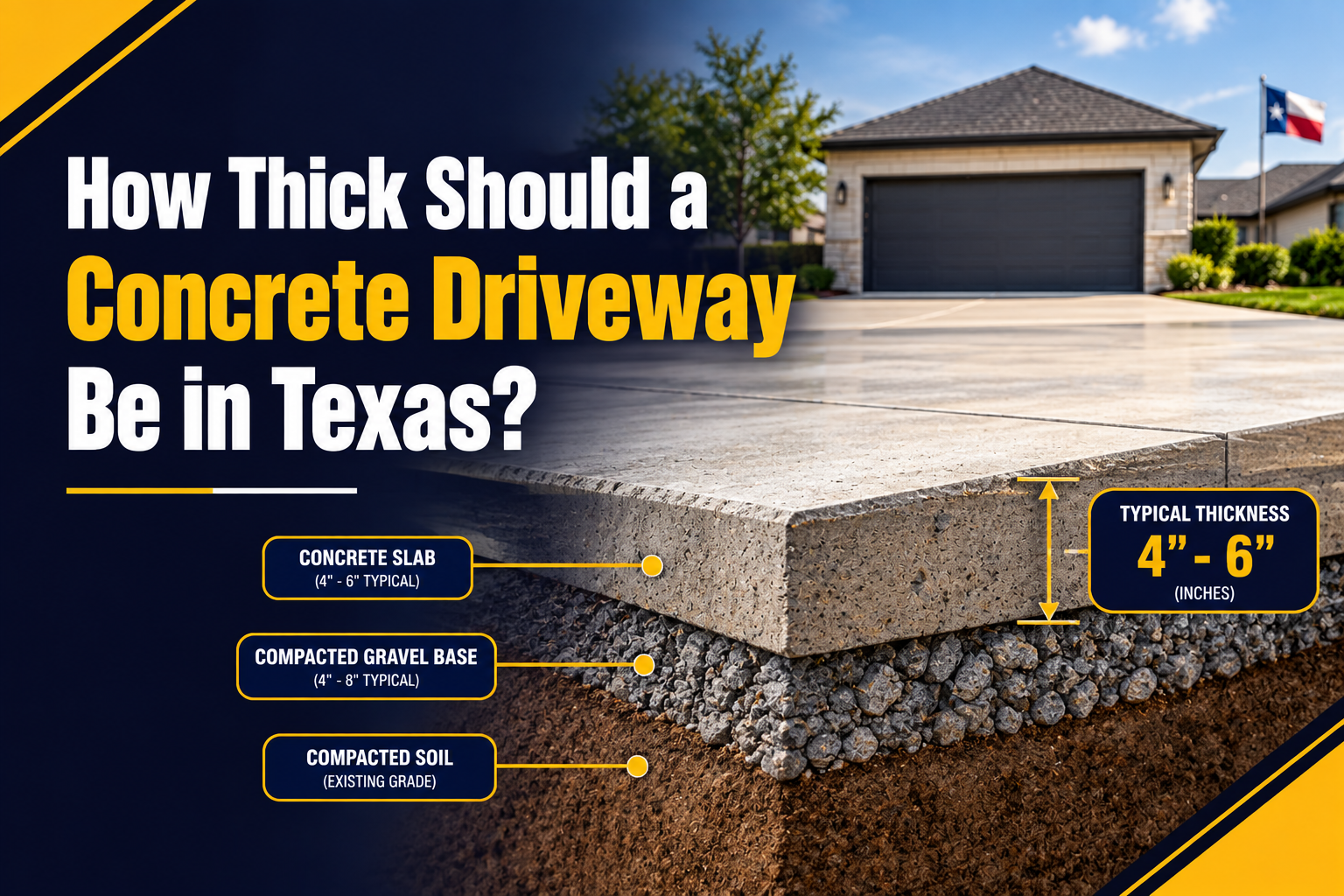
How thick should a concrete driveway be?
It's a simple question with an important answer:
The correct thickness depends on how the driveway will be used, expected vehicle loads, site conditions, subgrade preparation, reinforcement, and the overall design of the project.
There isn't one specification that's appropriate for every Texas property.
Here's what San Antonio homeowners should know.
Is 4 Inches Thick Enough for a Concrete Driveway?
Four inches is a commonly referenced thickness for residential concrete applications involving typical passenger vehicles, but that doesn't mean four inches is automatically appropriate for every driveway.
A professional contractor should consider the actual conditions and expected use of the driveway.
For example, a driveway routinely supporting heavier trucks, trailers, RVs, or other substantial loads may require a different design.
Does Thicker Concrete Make a Driveway Stronger?
Thickness can influence the capacity and performance of concrete, but simply pouring thicker concrete isn't a substitute for proper installation.
Think of a driveway as a system.
Performance can depend on:
The soil + subgrade + base + concrete + reinforcement + joints + drainage + workmanship.
Ignoring one component and focusing exclusively on thickness oversimplifies the project.
Why Is the Base Under a Driveway Important?
Your driveway needs proper support.
If the material beneath the concrete isn't appropriately prepared or compacted, movement can potentially occur regardless of how attractive the finished surface looks.
Site preparation can involve evaluating existing soil, removing unsuitable materials where necessary, establishing appropriate grades, preparing the base, and considering drainage.
Specific requirements depend on the property.
Does a Concrete Driveway Need Rebar?
Reinforcement requirements vary by project.
Depending on the design and conditions, contractors may recommend reinforcing materials such as steel reinforcement or other methods.
Reinforcement and concrete thickness aren't interchangeable. Each serves a role within the overall design.
Ask your contractor what is being recommended for your driveway and why.
What About Heavy Trucks and RVs?
Tell your contractor how you intend to use the driveway before installation.
A homeowner parking two passenger vehicles has different requirements from someone regularly parking an RV, work truck, trailer, or other heavy equipment.
Future use matters too.
If you're planning to purchase an RV next year, discuss that now—not after the driveway has been installed.
Do Texas Conditions Affect Driveway Installation?
Local conditions matter.
San Antonio concrete is exposed to substantial heat, changing weather, rainfall, soil conditions, and drainage challenges that vary from property to property.
That's why Easter Concrete evaluates the actual project rather than treating every driveway identically.
What's the Best Concrete Driveway Design for My San Antonio Home?
The best design is one based on your property, intended use, site conditions, drainage, and long-term goals.
At Easter Concrete Contracting, we help homeowners determine the right approach before the concrete is poured.
Planning a New Concrete Driveway?
Get the project started with an on-site evaluation.
Contact Easter Concrete Contracting today to request a free estimate for your San Antonio-area concrete project.